What Does Pro Se Mean? A Plain-English Guide for Small Claims
Saw "pro se" on a court paper? It means handling your own case without a lawyer. Here's the plain-English meaning and what it looks like in small claims.

Saw "pro se" on a court paper? It means handling your own case without a lawyer. Here's the plain-English meaning and what it looks like in small claims.
Filing fees, serving papers and a few possible extras: what small claims court costs, state by state, and how to plan for it.
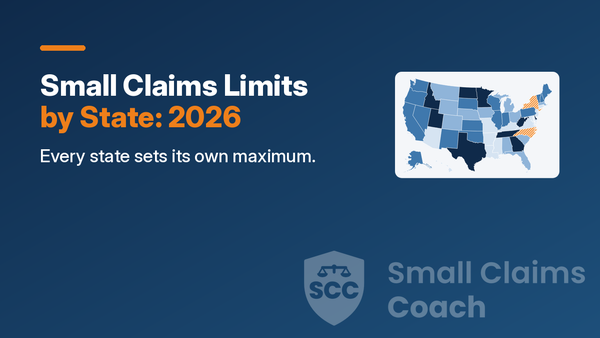
Every state sets its own small claims limit. Here's the list, what counts toward it, and what to do if your claim is bigger.
A map pin isn't a court. Here's a calm, step-by-step way to find the exact small claims court for your case before you file anything.
AI can speed up small claims prep. It can also invent cases, miss your court's rules, and tempt you to touch your evidence. Here's how to use it safely.
Small claims court mostly awards money. When a judge can order property returned or a deal undone, why it varies by state, and how to frame your claim.
A witness who doesn't show up can't help you. Here are your three paths: a witness who comes on their own, a written statement, or a subpoena served in time.
Sued in small claims? Compare all six options side by side: pay, settle, fight, counterclaim, reschedule or move the case, plus a quick checklist.
Landlord-tenant small claims: security deposit disputes, damage beyond normal wear and tear, and unpaid rent, with the evidence each side needs.
Losing stings. Here's a calm overview of the options that may exist after a small claims judgment, and why you should check your court's deadlines right away.
Settling isn't losing. It trades some of your claim for certainty, without the risk of a hearing. Here's how settlement negotiation, stipulated judgments, releases and payment plans work.
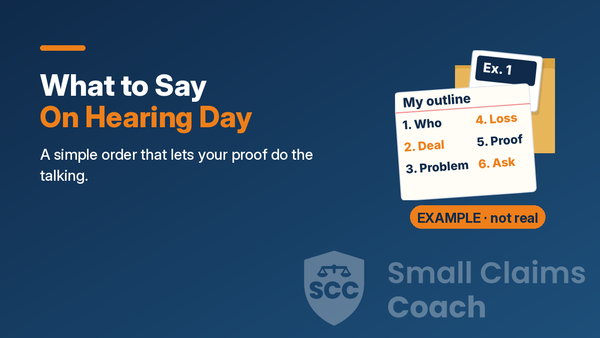
The night before a hearing, most people's minds go blank. Here's what to say, in what order, and how to let your exhibits do the arguing.
Before You File
What to know before you fill out a small claims form: the exact legal name, the amount, where to file, fees and fee waivers, plus a fictional worked example.
Before You File
Filed your small claim? Next the other side must be served. Who can serve, common methods, proof of service, serving a business, and what to do if service fails.
After the Hearing
Won in small claims but haven't been paid? The usual 5-step path to collecting a judgment: written demand, debtor exam, garnishment, bank levies and liens.
Before You File
The space on the form is small for a reason. Here's how to tell your story in a few clear sentences: who, what, when, how much, and why they owe it.
Before You File
The number that matters isn't how much it hurt. It's how much you can show it cost you. Here's how to build a number you can stand behind.
Before You File
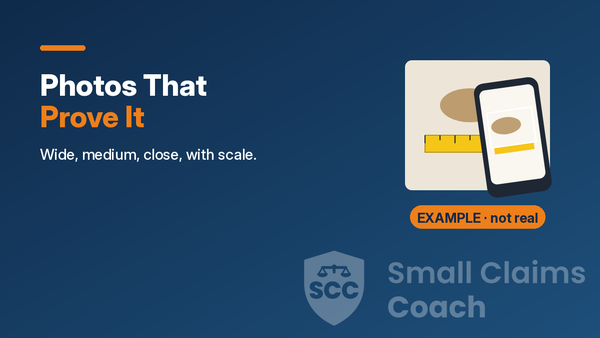
A photo can be your strongest evidence or almost useless. The difference is whether someone who wasn't there can tell what, where, how big and when.
Before You File
The text that proves your point is the one you didn't delete. Here's how to preserve evidence, ask others to keep theirs, and label exhibits for court.
If You're Sued
Been sued in small claims court? Don't panic. Read the papers, calendar the hearing, gather your proof and prepare calmly, one step at a time.
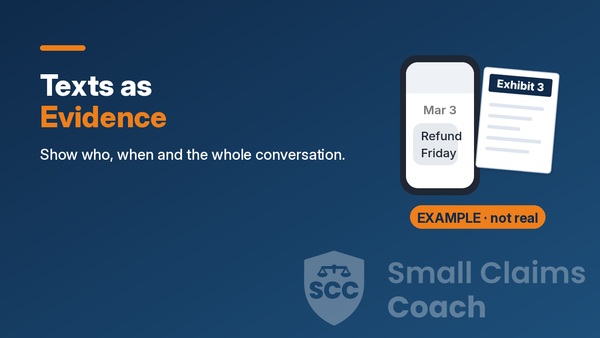
Before You File
"I have the texts" isn't the same as "I can show the texts." Here's how to save them so a judge who wasn't there can follow along.
Before You File
Filing is built to be simple. Getting paid is the hard part. Ten calm checks before you file help you decide whether filing makes sense.