Maximum Amount for Small Claims by State: 2026 Limits Table
Every state sets its own small claims limit. Here's the list, what counts toward it, and what to do if your claim is bigger.
Before you file, it helps to know the most your court can award, so you don't lose time in the wrong court.
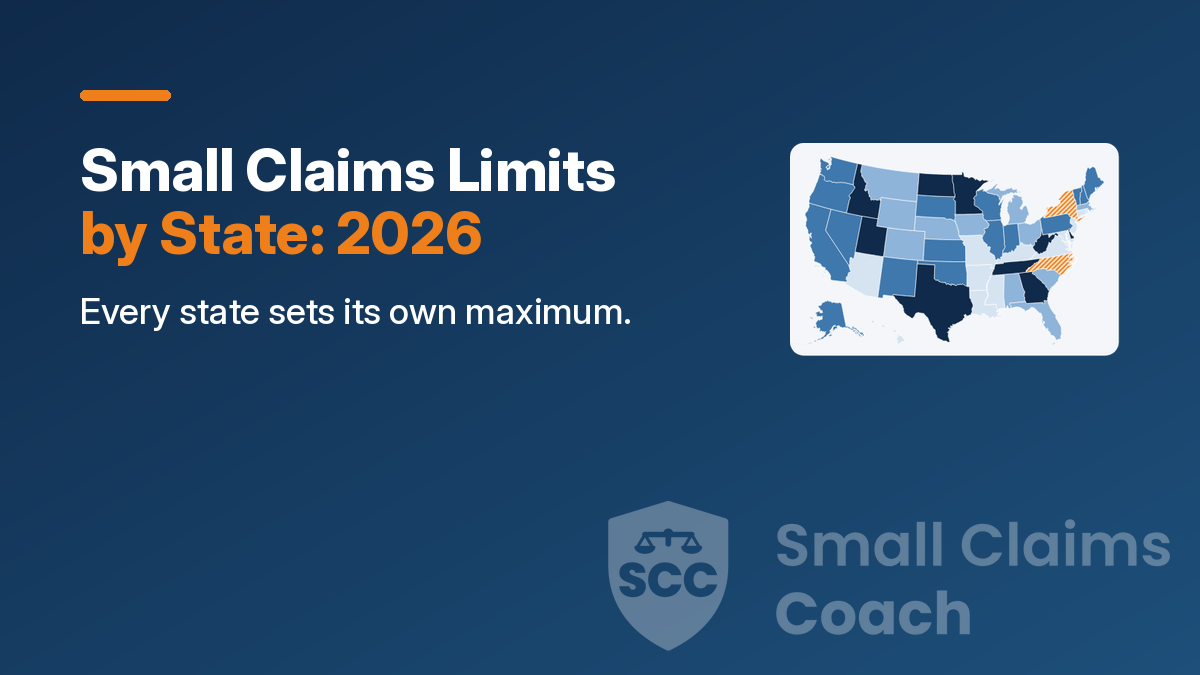
The quick answer: there's no single national limit. Each state sets its own maximum, and on our state guides they run from $2,500 (Kentucky) to $25,000 (Delaware's Justice of the Peace Court and Tennessee). Some states set different caps by court or by type of claim. Working out what your own claim is worth? See how much can I sue for in small claims. Limits change, so always confirm on your state guide or with your court before you file.
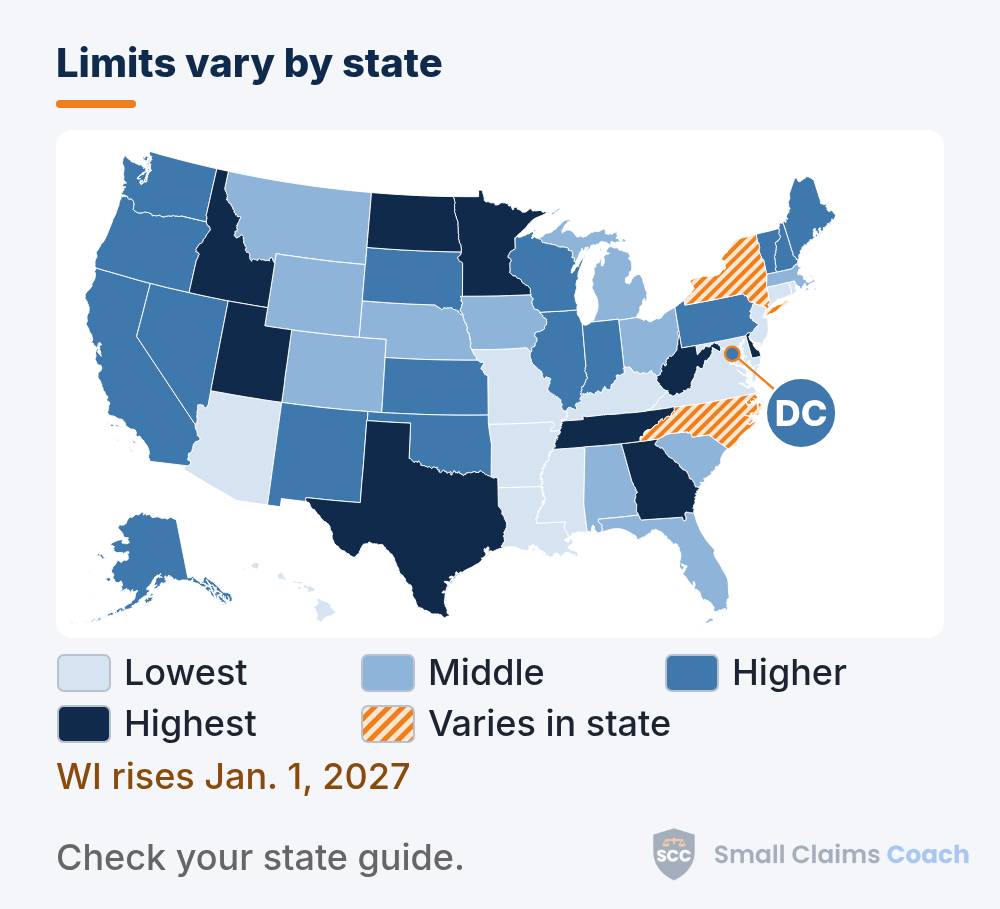
Small claims limits in all 50 states and DC
These are the limits shown on our state guides. Choose your state for its court, forms and where to file.
| State | Limit |
|---|---|
| Alabama | $6,000 |
| Alaska | $10,000 |
| Arizona | $5,000 |
| Arkansas | $5,000 |
| California | $12,500 for people; $6,250 for businesses |
| Colorado | $7,500 |
| Connecticut | $5,000 ($15,000 against a certified home-improvement or new-home contractor) |
| Delaware | $25,000 (Justice of the Peace Court) |
| District of Columbia | $10,000 |
| Florida | $8,000 |
| Georgia | $15,000 for actions filed through Dec. 31, 2026; $25,000 for actions filed on or after Jan. 1, 2027 |
| Hawaii | $5,000 |
| Idaho | $15,000 |
| Illinois | $10,000 |
| Indiana | $10,000 |
| Iowa | $6,500 |
| Kansas | $10,000 |
| Kentucky | $2,500 |
| Louisiana | $5,000 |
| Maine | $10,000 |
| Maryland | $5,000 |
| Massachusetts | $7,000 (no cap for motor-vehicle property damage) |
| Michigan | $7,000 |
| Minnesota | $20,000 (Conciliation Court) |
| Mississippi | $3,500 |
| Missouri | $5,000 |
| Montana | $7,000 |
| Nebraska | $7,500 |
| Nevada | $10,000 |
| New Hampshire | $10,000 |
| New Jersey | $5,000 (Small Claims Section) |
| New Mexico | $10,000 |
| New York | $10,000 NYC; $5,000 District and City Courts; $3,000 Town and Village Courts |
| North Carolina | $5,000 to $10,000, by county |
| North Dakota | $15,000 |
| Ohio | $6,000 |
| Oklahoma | $10,000 |
| Oregon | $10,000 |
| Pennsylvania | $12,000 |
| Rhode Island | $5,000 |
| South Carolina | $7,500 (Magistrates Court) |
| South Dakota | $12,000 |
| Tennessee | $25,000 |
| Texas | $20,000 |
| Utah | $20,000 (includes attorney's fees) |
| Vermont | $10,000 ($5,000 for consumer-credit or medical debt) |
| Virginia | $5,000 |
| Washington | $10,000 for people; $5,000 for businesses |
| West Virginia | $20,000 (since July 7, 2025) |
| Wisconsin | $10,000 through Dec. 31, 2026; $15,000 from Jan. 1, 2027 ($5,000 for injury and other tort claims) |
| Wyoming | $6,000 |
Coach's Tip: Write down the limit you found, the page you found it on and the date you checked. If your claim is close to the limit, call the clerk to confirm.
Want a plan for your number?
The full guide is for Playbook members. It walks you through checking your claim against your court's limit, a limit-check record for your case folder, a made-up worked example, and a checklist before you file. The Playbook also gives you a filled-in sample of your state's claim form and your state's Playbook section. General legal information, not advice about your case.
$149 for your first year (introductory offer), then $199 a year. Join now.
What counts toward the limit?
It depends on the state. Some states count attorney's fees toward the cap and leave out interest and court costs. Texas and Utah do this, for example (Texas Rule of Civil Procedure 500.3(a); Utah Code 78A-8-102). Others treat these differently. Check your state guide before you add anything to your number.
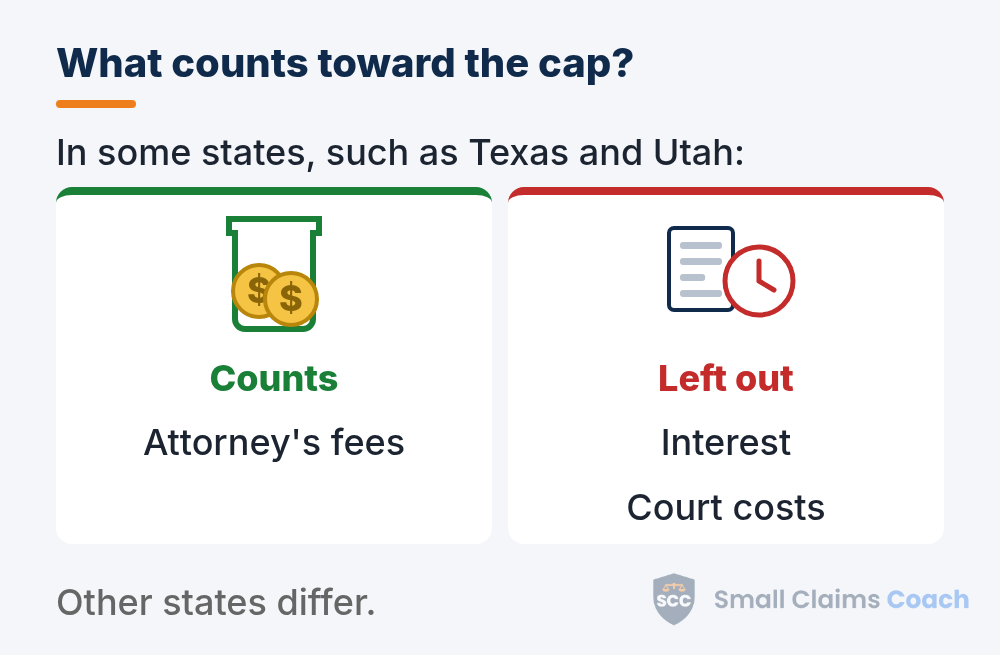
Some states also use different caps by court or claim type. New York's limit depends on which court you file in. Washington has a lower cap for businesses. Vermont has a lower cap for consumer-credit and medical debt, and Wisconsin for injury claims. Connecticut and Massachusetts have special rules for certain contractor and vehicle cases.
Is there a minimum amount for small claims?
Many states don't set a minimum. In Oregon, most money claims of $750 or less must be filed in small claims, though some cases with statutory attorney fees may go to the regular court instead. If your claim is very small, ask your clerk how your court handles it.
What if your claim is over the limit?
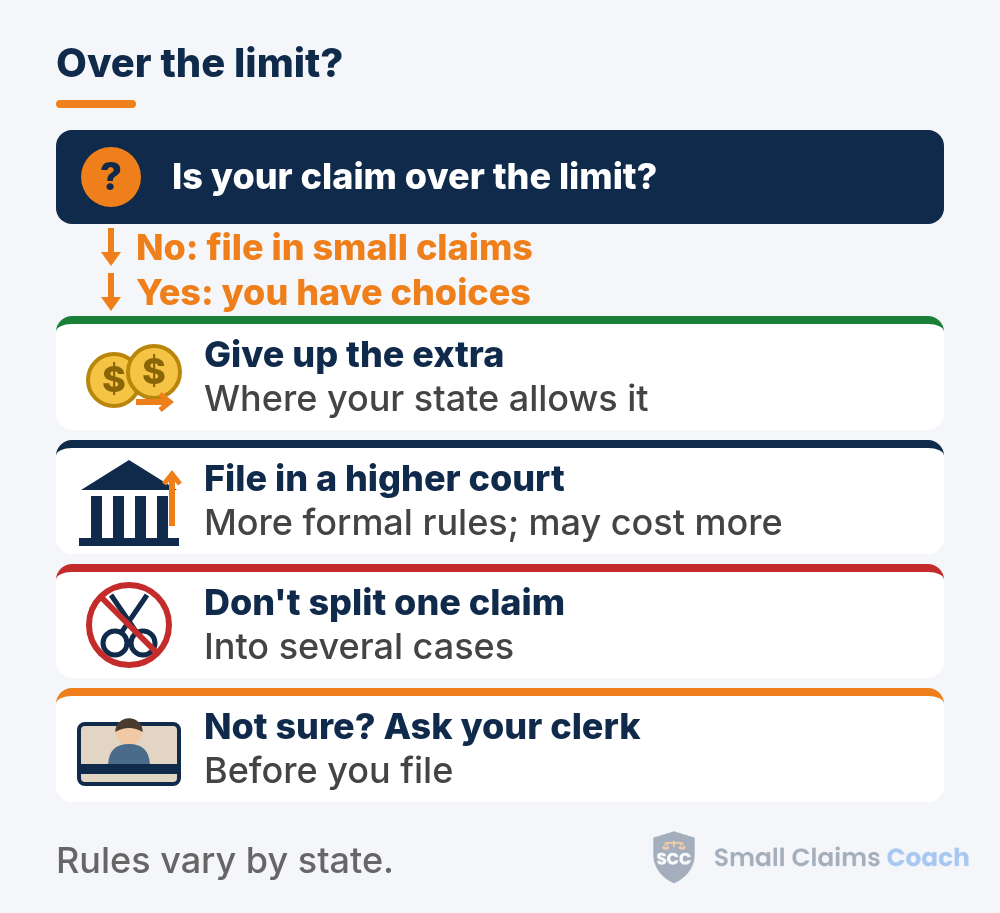
You usually have a few choices, and the rules vary by state:
- Give up the extra. Some states let you sue for the limit and waive the rest. In Pennsylvania you can, but the waiver is undone if the other side appeals. In Nevada, if you're owed more than the limit by the same person, you must combine those debts into one claim and give up the amount over the limit. Other states vary, so ask your clerk.
- File in a higher court. That court often has more formal rules and may cost more.
- Don't split one claim into several cases. Nevada's rules say so expressly. Other states vary, so check yours.
Whether you can trim a claim to fit varies by state, so ask your clerk before you file.
Limits that are changing
Georgia's limit goes from $15,000 to $25,000 for actions filed on or after Jan. 1, 2027. Wisconsin's general limit goes from $10,000 to $15,000 on Jan. 1, 2027. Filing fees change too; see how much it costs to sue in small claims.
Frequently asked questions
What is the maximum amount for small claims court?
It depends on your state, and sometimes on the court and type of claim. On our state guides, limits run from $2,500 to $25,000. Check your state guide.
Is there a minimum for small claims court?
Many states don't. See Is there a minimum amount above.
This information is for educational purposes only. It is not legal advice. Rules vary by state and court. We try to keep every page up to date, but local rules, fees, and information change regularly. If you have questions, or our numbers don't match what your court publishes on its website, double-check with your court clerk.
Small Claims Coach uses public information to coach you as you organize and present your own case. We are not your lawyer, there is no attorney-client relationship, and we don't want the details of your case. Check your state's rules.
In the full guide (Playbook members):
- Checking your claim against your court's limit, step by step
- A limit-check record you can keep in your case folder
- A worked example: Sam Rivera v. Typical Properties LLC
- A checklist before you file
- Questions to ask the clerk
- What counts toward the limit, and how to check