What to Do If You Lose in Small Claims Court: Appeals, New Trials, and Other Options
Losing stings. Here's a calm overview of the options that may exist after a small claims judgment, and why you should check your court's deadlines right away.
Losing stings, especially when you prepared and believed you were right. Take a breath. Then do one thing quickly: find out your deadlines. After a small claims judgment, the windows to act can be short.
The quick answer: what to do if you lose
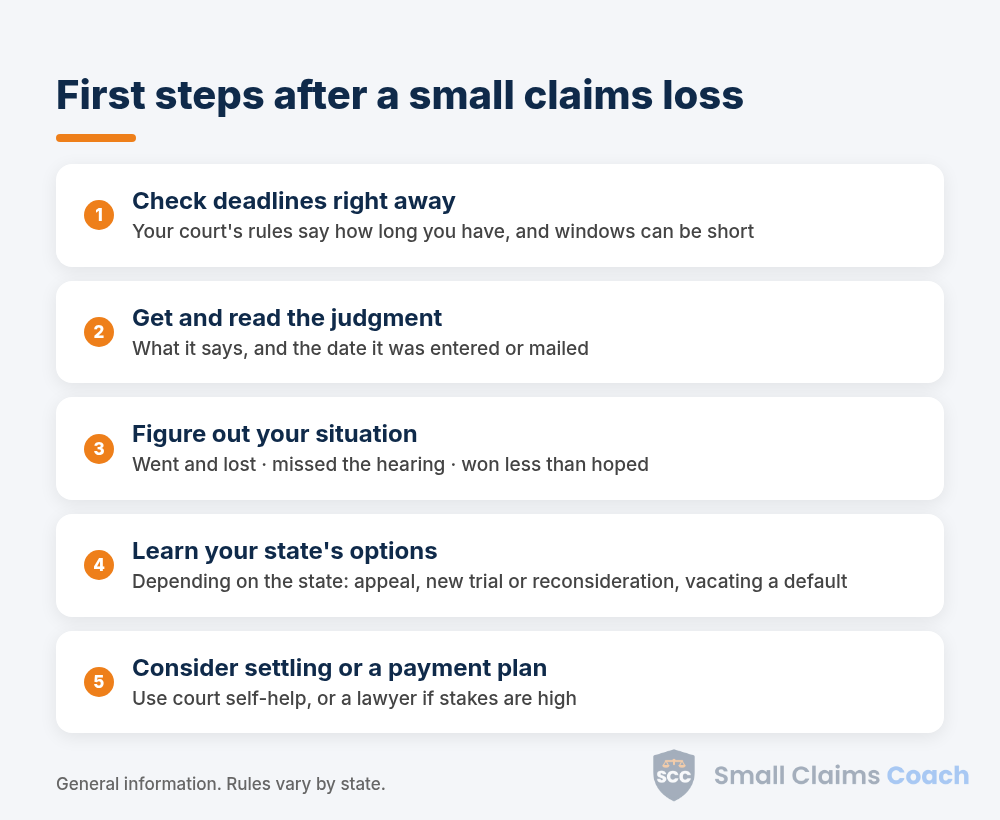
- Check your court's rules right away for any deadline to appeal or ask for reconsideration. Deadlines can be short and may run from the date of the judgment or the date it was mailed.
- Get a copy of the judgment and read exactly what it says and when it was entered.
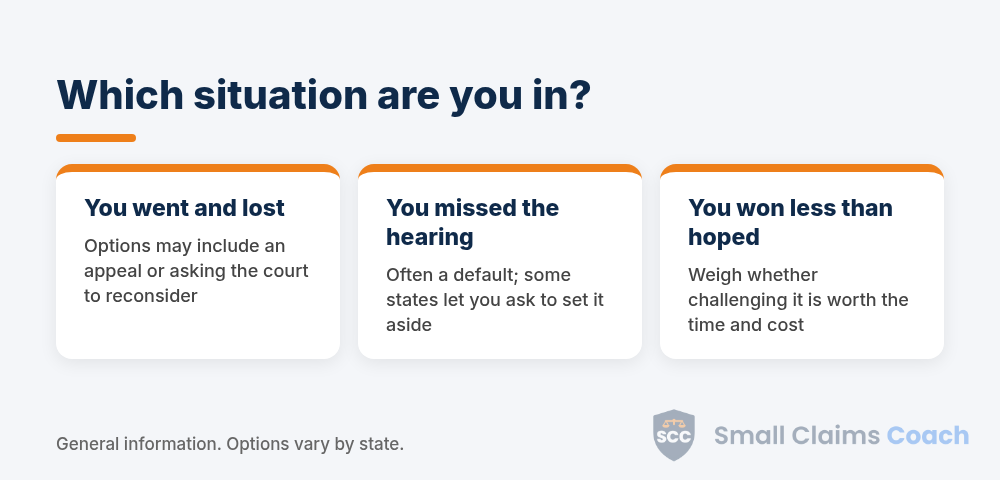
- Figure out which situation you're in: you went and lost; you missed the hearing (a default); or you won but less than you hoped.
- Learn the options your state offers. Depending on the state, these may include an appeal, a request for a new trial or to reconsider, or a request to set aside (vacate) a default judgment.
- Know that the rules vary a lot. In some states, who can appeal and how it works differ for the person who filed and the person who was sued.
- Consider settlement or a payment arrangement if you owe money.
- Use your court's self-help resources, and consider talking to a lawyer if the stakes are high.
Most state Playbook sections now include an appeals section. For any state, start with your state's page on our states hub.
Can I appeal a small claims judgment?
It depends on your state, and sometimes on whether you were the person who filed or the person who was sued. Some states allow an appeal to a higher court, sometimes as a brand-new hearing. Others limit appeals or offer different options, like asking the same court to reconsider. Check your court's rules for what's available to you and how to start it.
How long do I have to appeal a small claims decision?
Deadlines vary by state and can be short. They may run from the date the judgment was entered or from the date it was mailed. Read your judgment, check your court's rules or self-help pages, and ask the clerk if you're unsure. Put the deadline on your calendar right away.
What if I missed my small claims hearing?
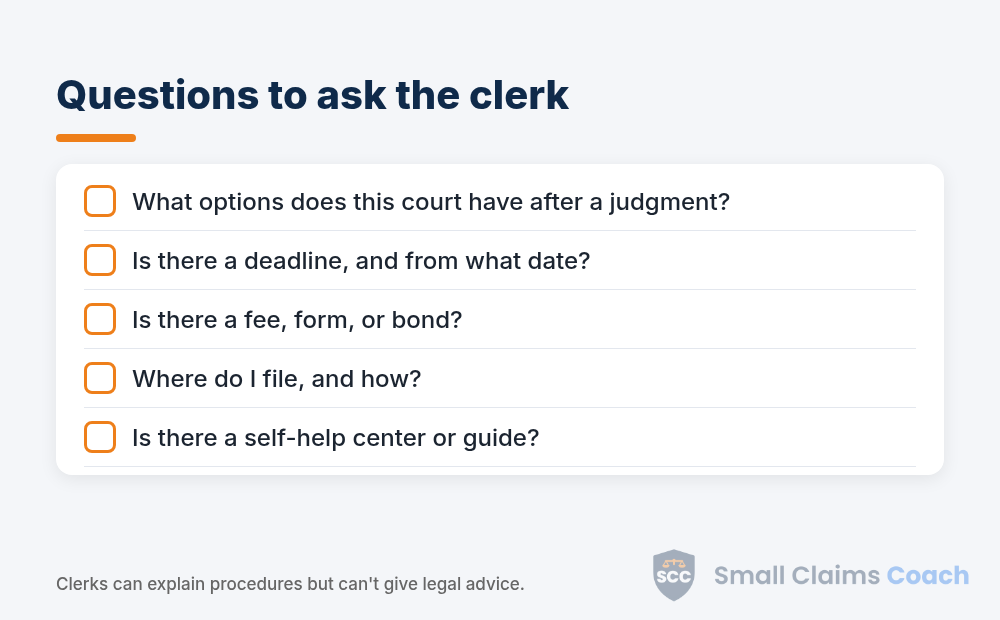
If you missed the hearing, the court may have entered a default judgment. Many states have a process to ask the court to set aside (vacate) a default, often requiring a good reason for missing it and acting quickly. Gather proof of why you missed it, check your court's rules, and ask the clerk about the process.
What happens if I lose and owe money?
If the judgment says you owe money, it usually doesn't go away on its own. Ignoring it can lead to collection steps that vary by state. Consider contacting the other side to arrange payment, possibly through a written payment plan. Check your court's rules on paying a judgment and on any collection process.
Can I ask the judge to reconsider?
Some courts allow a request for a new trial or for the judge to reconsider, usually on limited grounds and with a deadline. Disagreeing with the result is often not enough on its own. Check your court's rules.
What if I won, but less than I asked for?
A partial win is still a judgment in your favor. Think about whether challenging it is worth the time, cost, and risk, compared to collecting what you were awarded. Your options depend on your state.
Should I appeal or move on?
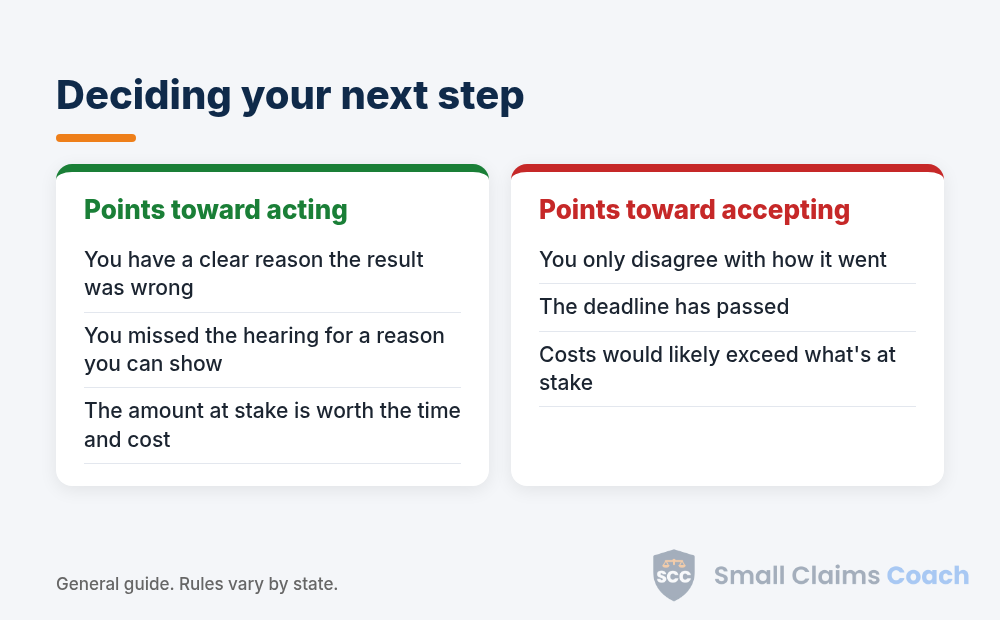
Ask yourself what you would want changed, whether you have a clear reason the result was wrong, what the deadline and costs are, and how much is really at stake. Sometimes the best next step is a settlement or simply accepting the result and moving forward.
What's the difference between an appeal and setting aside a default?
In general terms, an appeal asks a higher court (or a new hearing) to change a decision made after a hearing. Setting aside, or vacating, a default asks the same court to undo a judgment entered because someone didn't show up, so the case can be heard. They usually have different forms, deadlines, and requirements, and not every state offers both in the same way. Check your court's rules to see which one fits your situation.
Start with your state's page on our states hub to find your court's self-help resources.
Frequently asked questions
Can the person who sued me appeal if they lose?
It depends on the state. In some states the rules are different for the person who filed and the person who was sued. Check your court's rules.
Is a small claims appeal a new trial?
In some states an appeal is a new hearing in a higher court, and in others it's a review of what happened. Check your court's rules.
Do I need a lawyer to appeal a small claims case?
Not always, but appeals can involve different rules and courts. Consider getting legal advice if the stakes are high.
Does it cost money to appeal?
There may be a filing fee, and some courts require a bond or deposit. Check your court's fee schedule and rules.
Can I get a default judgment set aside?
Many states have a process for asking to vacate a default, often with a deadline and a reason you missed the hearing. Check your court's rules.
What if I can't pay the judgment all at once?
Consider proposing a written payment plan to the other side, and check whether your court has a process for payment arrangements.
Where can I find my state's rules?
Start with your court's self-help pages and our states hub, and ask the clerk about procedures.
In the full guide (Playbook members):
- The main post-judgment options explained in general terms
- How to read your judgment and find your deadline
- If you missed the hearing: what a request to vacate a default generally involves
- If you owe money: payment and settlement options
- Worked examples with fictional parties
- A first-48-hours checklist and a deadline tracker
- Common mistakes
- How to propose a payment plan if you owe
- A worksheet for deciding whether to challenge
This website and our Playbook are designed to give you the tools and confidence to handle your small claims case yourself, without a lawyer. If you think something is missing, we would like to hear about it so we can keep improving our Playbook. But if your situation is complicated, does not fit the samples we cover, or a filing deadline is close, you may want to call a lawyer.
Want the step-by-step version for your state? See the Playbook.