How to Fill Out and File a Small Claims Form (With a Worked Example)
What to know before you fill out a small claims form: the exact legal name, the amount, where to file, fees and fee waivers, plus a fictional worked example.
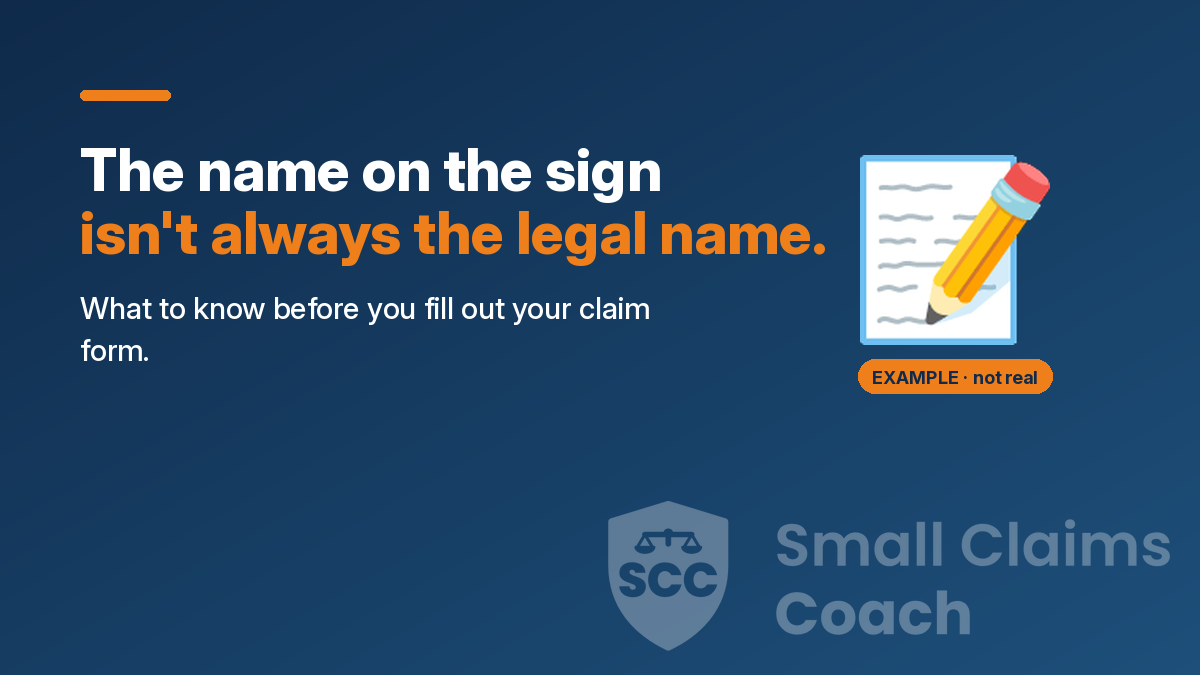
Most claim forms fit on a page or two. The parts that matter most are easy to get wrong, starting with the name.
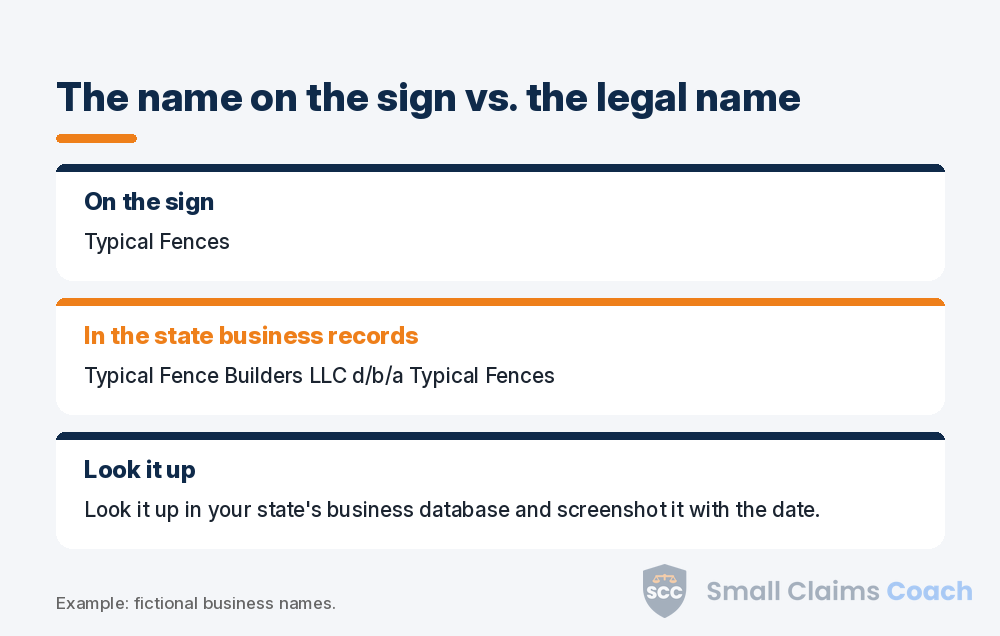
We'll use one fictional case throughout: Jordan Sample is suing a fence company that calls itself "Typical Fences" on its sign. The legal name in the state records is Typical Fence Builders LLC, and that difference matters on the form.
The quick answer: how do you fill out and file a small claims form?
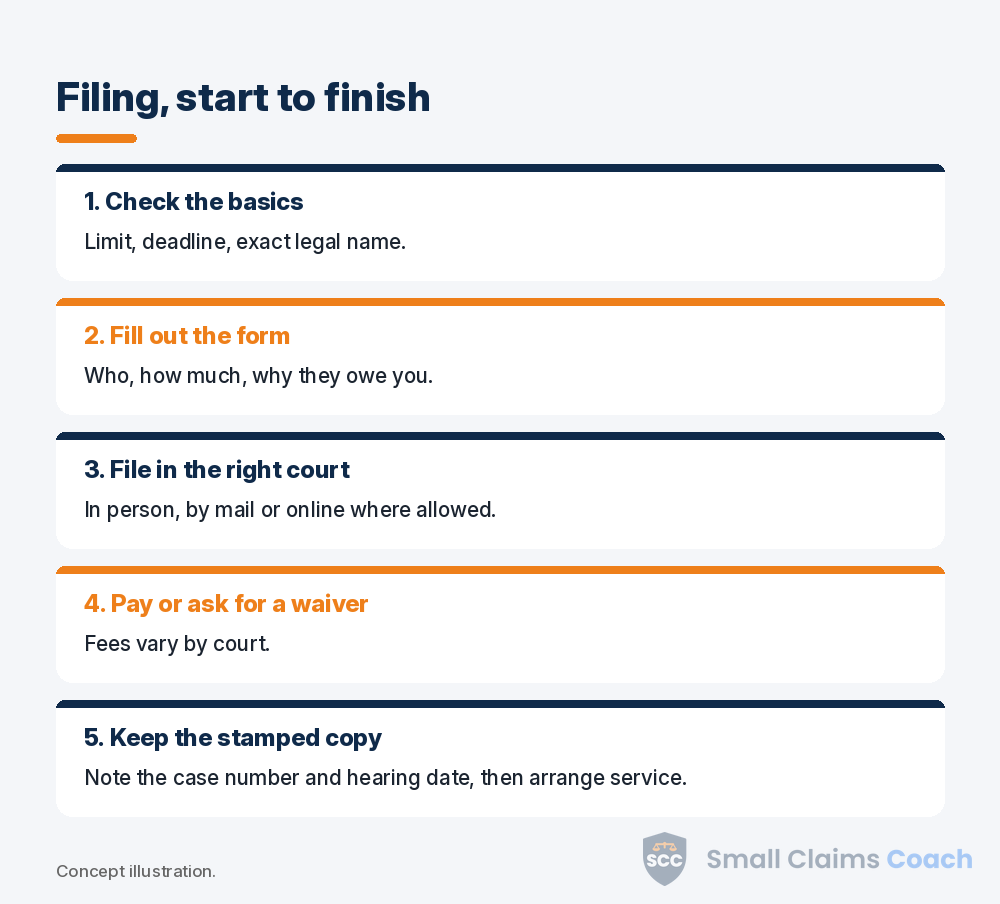
To file a small claims case, get your court's claim form and fill in your name, the defendant's exact legal name and address, the amount you're asking for, and a short plain-English reason. File it in the right court (in person, by mail, or online where your court allows it) and pay the filing fee or ask for a fee waiver. The clerk gives you a case number and usually a hearing date.
Filling out your form? See a filled-in sample first.
The full guide is for Playbook members: an annotated, line-by-line version of the fictional sample form, a "why they owe you" fill-in template, a pre-filing checklist, and a fee-waiver prep worksheet. The Playbook also gives you a filled-in sample of your state's claim form (every state and DC has one; for Mississippi, Oklahoma and Wyoming it's a sample layout we made, so you'd get the real form from the court clerk) and your state's Playbook section. One membership covers every state. $149 for your first year (introductory offer), then $199 a year. Join now.
What should you check before you start?
- Confirm the amount fits your state's limit and you're within the statute of limitations (the legal deadline to sue). See how much you can sue for.
- Send a demand letter first. Some courts expect it, and it may get you paid.
- Not sure of your total? Use the free quick total in the damages estimate calculator.
Find the exact legal name
Check the exact legal name and registered agent:
- Search your state's business-entity database (usually the Secretary of State) for the business's exact legal name, such as "Typical Fence Builders LLC," not just the name on the sign.
- Write down its registered agent and that address. That's usually where a business gets served.
- If it trades under another name, look for an assumed-name or "doing business as" filing (in some states, at the county clerk) and list both: "Typical Fence Builders LLC d/b/a Typical Fences."
- For a person, use their full legal name and a current address where they can be served.
- Save a screenshot of the record with the date. A wrong name can make the judgment hard to collect.
What does the claim form ask, section by section?
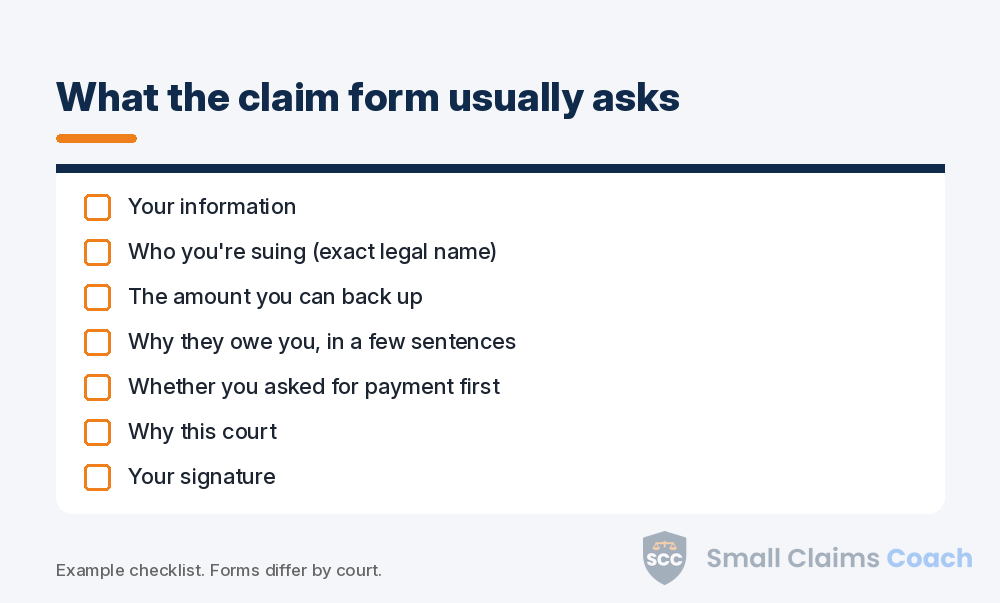
- Your information: full legal name, address, phone. Many courts require a mailing address that will get court notices.
- Defendant: exact legal name and an address where they can be served.
- Amount: a specific number you can back up line by line.
- Why they owe you: a few short sentences: what was agreed, what went wrong, when, and what it cost you.
- Demand: many forms ask whether you asked for payment first.
- Venue: why you're filing in this court.
- Signature: you're usually swearing it's true (under "penalty of perjury"), so double-check every date and number.
A worked example (fictional)
Jordan Sample v. Typical Fence Builders LLC
This case is made up for teaching purposes. Any resemblance to real people or businesses is coincidental.
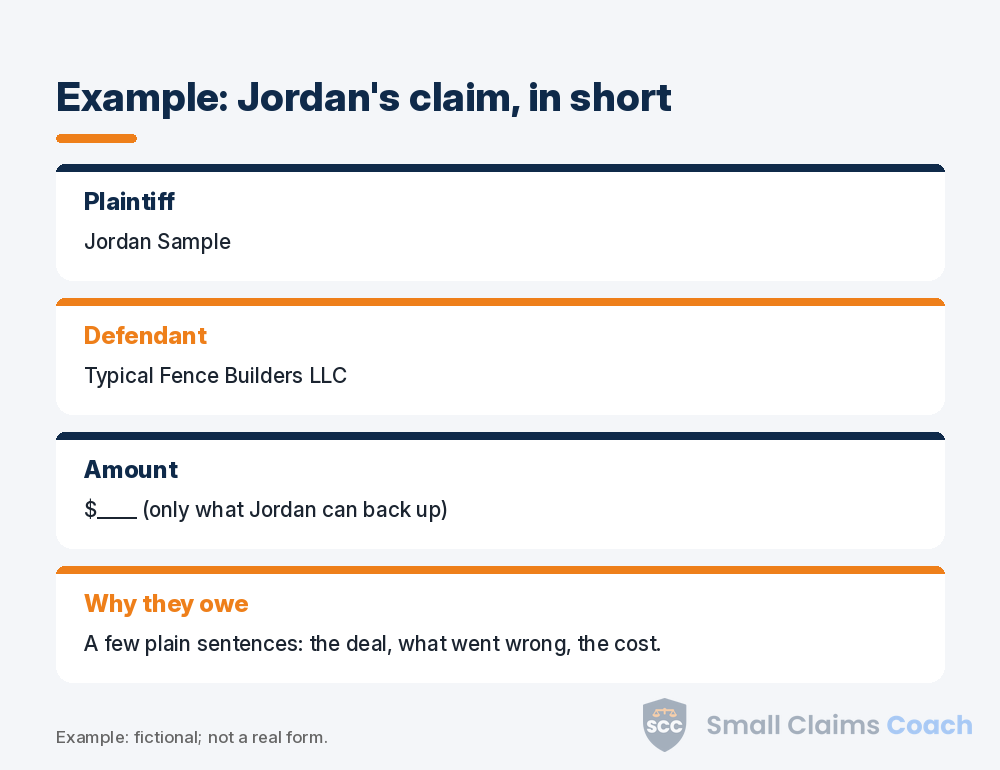
Plaintiff: Jordan Sample
Defendant: Typical Fence Builders LLC (the name on the state business-entity search, not just the sign on the truck)
Amount: $2,400 (fictional): $2,000 paid up front + $400 to have the unfinished work removed
Why: "On March 3, I paid the defendant $2,000 to install a fence by April 1. They set four posts and stopped. They did not return after my calls on April 5 and April 12 and my letter of April 20 (sent certified mail) asking for a refund. I paid another company $400 to remove the posts."
Want this for your own state's form?
The Playbook has a filled-in sample of your state's claim form, using a made-up case, with every box explained (every state and DC has one; for Mississippi, Oklahoma and Wyoming it's a sample layout we made, so you'd get the real form from the court clerk). General legal information, not advice about your case.
Where do you file?
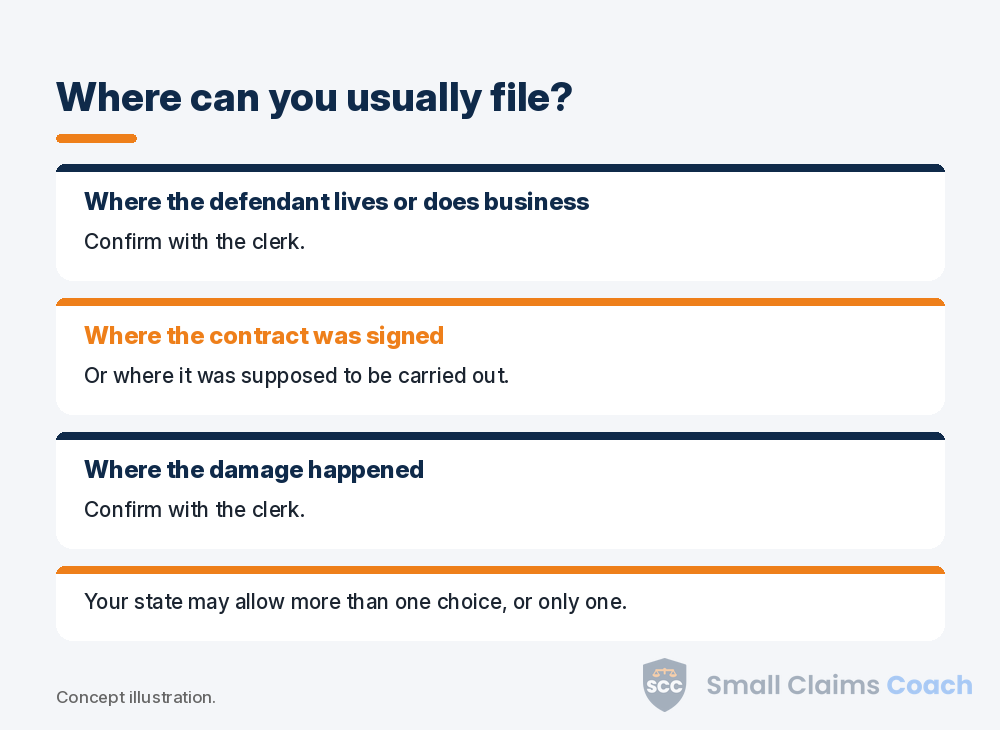
Each state decides which courthouse can hear your case (called "venue"). You can usually file where:
- the defendant lives or does business
- the contract was signed or was supposed to be carried out
- the damage happened
If you file in the wrong place
Your state may allow more than one choice, or only one. File in the wrong place and the case may be moved or dismissed, and you could lose the fee. If the statute of limitations is close, refiling could be a real problem. Ask the clerk or check your state page on the states hub before you file. Exact venue rules: check your court's rules.
In the full guide (Playbook members):
- An annotated version of the fictional sample form, line by line
- A "why they owe you" fill-in template
- A pre-filing checklist
- A checklist for filing for someone other than yourself
- A fee-waiver prep worksheet
- How much it costs, and whether fees can be waived
- Who can sue, and what happens after you file
- Common questions about filing the form
This website and our Playbook are designed to give you the tools and confidence to handle your small claims case yourself, without a lawyer. If you think something is missing, we would like to hear about it so we can keep improving our Playbook. But if your situation is complicated, does not fit the samples we cover, or a filing deadline is close, you may want to call a lawyer.
This information is for educational purposes only. It is not legal advice. Rules, deadlines, fees and forms vary by state and court. Check your court's rules or self-help center before you act.
You do the work. The Playbook hands you the plays.
The full guide covers the list above, step by step. Your membership also includes a filled-in sample of your state's claim form and your state's Playbook section, with prep guides that work in any state: a document checklist, exhibit labels, a prep timeline and a hearing-day outline. One membership covers every state.