How Much Does It Cost to Sue in Small Claims Court? (2026)
Filing fees, serving papers and a few possible extras: what small claims court costs, state by state, and how to plan for it.
If someone owes you money, the last thing you want is a surprise bill just to get your day in court.
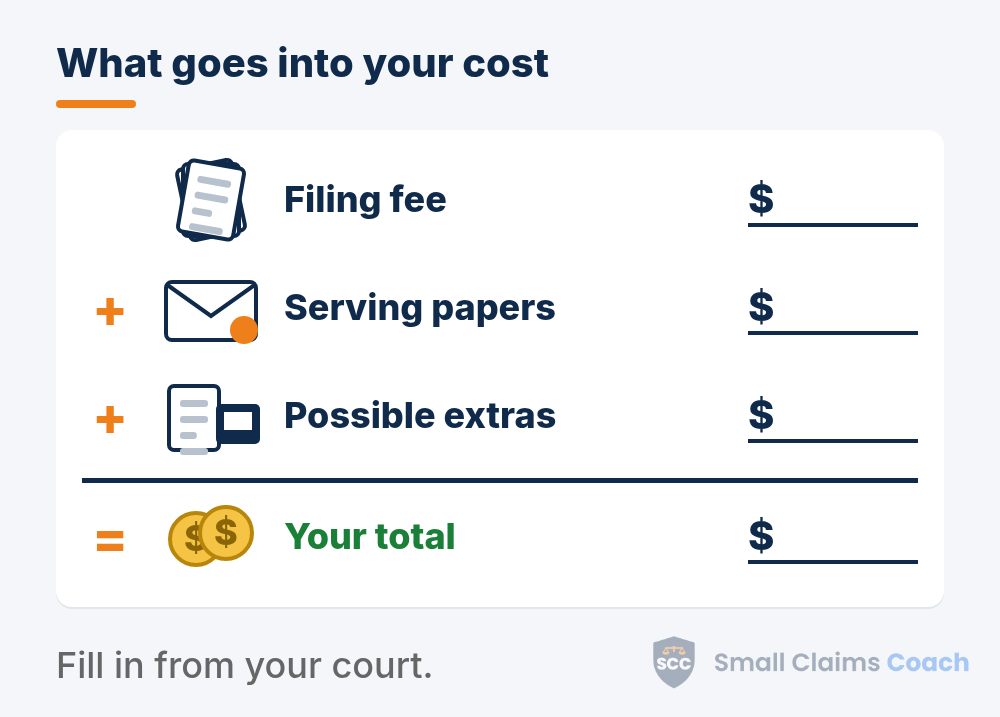
The quick answer: the main cost is the court's filing fee. It depends on your state and court, and often on how much you're claiming. On our state guides, fees run from a few dollars (DC's $5 tier, Wyoming's $10) to several hundred (up to $295 in Florida, and $287 to $379 in Cook County, Illinois). Then add the cost of serving the papers, plus a few possible extras. Fees change, so confirm on your state guide or your court's website.
Small claims filing fees by state
These are the filing fees shown on our state guides. Many states charge more for bigger claims. Choose your state for details, local fees and where to file.
| State | Filing fee |
|---|---|
| Alabama | $35, $109 or $198, by amount |
| Alaska | $50 for $2,500 or less (higher tier on our guide) |
| Arizona | $30 state base, plus local fees |
| Arkansas | Check with your district court clerk |
| California | $30 to $75 ($100 if you filed more than 12 small claims in California in the past 12 months) |
| Colorado | $31 or $55 |
| Connecticut | $95 |
| Delaware | $35 to $55 |
| District of Columbia | $5 or $10 (higher tiers on our guide) |
| Florida | $50 to $295, plus $4 |
| Georgia | For example, Chatham County Magistrate Court: Civil Suit $53, plus $50 service per defendant. Fees vary by county; check with your clerk. |
| Hawaii | $35 |
| Idaho | About $69; check with the clerk. |
| Illinois | Set by county (Cook County $287 to $379) |
| Indiana | For example, St. Joseph County: $97 ($87 if e-filed), plus $28 if the sheriff serves. Fees vary by county; check with your clerk. |
| Iowa | $115 |
| Kansas | $47.50 or $67 |
| Kentucky | $38, plus a $20 technology fee and local fees |
| Louisiana | $35 per defendant |
| Maine | $70 (includes a $15 mediation fee) |
| Maryland | $44 |
| Massachusetts | $40 to $150 |
| Michigan | $30 to $70 |
| Minnesota | $65, plus a county law library fee |
| Mississippi | For example, Rankin County: $75 for one defendant, $85 for two. Fees vary by county; check with your clerk. |
| Missouri | $20.50 (courts on the statewide case system) |
| Montana | Usually $30 |
| Nebraska | $58 |
| Nevada | $45 to $175 state base, plus county fees |
| New Hampshire | Check with the circuit court clerk |
| New Jersey | $35, plus $5 per added defendant |
| New Mexico | $77 (Magistrate Court) |
| New York | $15 or $20 |
| North Carolina | $96 |
| North Dakota | $20 |
| Ohio | Set by court (for example, Franklin County Municipal Court $92) |
| Oklahoma | $45 for $5,000 or less; $150 for more than $5,000, plus add-on fees |
| Oregon | $57 or $102 |
| Pennsylvania | $68.50 to $171, by amount (Philadelphia: $67.75 to $116.75) |
| Rhode Island | $55, plus $17.50 and $3 |
| South Carolina | $45 through Dec. 31, 2026; $65 from Jan. 1, 2027, plus a $25 assessment. Service is extra; check with the magistrate's office. |
| South Dakota | $24.84 to $42.84, by amount, plus $11.84 per added defendant |
| Tennessee | For example, Davidson County: $145.75 for a civil warrant. Fees vary by county; check with your clerk. |
| Texas | $54, plus service |
| Utah | $60, $100 or $185 |
| Vermont | $65 or $90 |
| Virginia | $36 base, plus local fees |
| Washington | $35, plus a county surcharge of up to $15 |
| West Virginia | $50 to $70, by amount, plus service |
| Wisconsin | $22 through Oct. 31, 2026; $39 from Nov. 1, 2026 |
| Wyoming | $10 |
Coach's Tip: Fees can depend on the amount you claim and the county you file in. Look up your exact court, and write down the fee and the date you checked.
Want to plan your full cost?
The full guide is for Playbook members. It includes a cost-tracking checklist, a step-by-step way to estimate your total before you file, a made-up worked example, and questions to ask the clerk. The Playbook also gives you a filled-in sample of your state's claim form and your state's Playbook section. General legal information, not advice about your case.
$149 for your first year (introductory offer), then $199 a year. Join now.
Other costs to plan for
Serving the other side. The other side has to be formally notified. Depending on your state, that may be by sheriff, certified mail or a process server, and the cost varies by county. See how to serve small claims papers.
Subpoenas, copies and exhibits. If you need a witness ordered to come, or certified copies of records, there may be small fees. Printing your exhibits costs a little too.
Appeals and collecting. Appealing, or using court tools to collect after you win, can bring more fees. See you won: how to get paid.
Can you get the fee waived?
Often, yes, if your income is low. Many courts have a form to ask the court to waive fees. The form and the rules vary by state, so check your state guide or ask the clerk.
Do you get your costs back if you win?
Often, but it depends on your state. In Pennsylvania, for example, the winner is entitled to recover filing and personal service costs from the losing side. Ask the judge or clerk how it works in your court.
Do you need to pay a lawyer?
Many people handle small claims cases themselves. Some states limit when lawyers can take part. Washington is one, according to our Washington guide. Check your court's rules.
Frequently asked questions
How much does it cost to file in small claims court?
It depends on your state, your court and often your claim amount. On our state guides, fees run from a few dollars to several hundred. Check your state guide.
Does it cost money to go to small claims court?
Usually there's a filing fee and a cost to serve the papers. Many courts can waive fees if you qualify.
This information is for educational purposes only. It is not legal advice. Rules vary by state and court. We try to keep every page up to date, but local rules, fees, and information change regularly. If you have questions, or our numbers don't match what your court publishes on its website, double-check with your court clerk.
Small Claims Coach uses public information to coach you as you organize and present your own case. We are not your lawyer, there is no attorney-client relationship, and we don't want the details of your case. Check your state's rules.
In the full guide (Playbook members):
- A cost-tracking checklist
- Estimating your total, step by step
- A worked example: Jordan Sample v. Typical Properties LLC
- Questions to ask the clerk
- How to read your court's fee schedule
- Small claims vs. regular civil court costs