Sued in Small Claims? All 6 of Your Options, Explained
Sued in small claims? Compare all six options side by side: pay, settle, fight, counterclaim, reschedule or move the case, plus a quick checklist.
Getting served with small claims papers is jarring, especially if you think you don't owe the money. You have more choices than "pay" or "show up and argue."
We'll use one made-up case throughout: Jordan Sample, a dog walker, is sued by a client, Alex Doe, after a gate was left open.
The quick answer: what are your options if you're sued?
If you're sued in small claims, you usually have six options: pay what you owe, settle for a deal, fight the claim at the hearing, file a counterclaim if they owe you, ask to reschedule, or, in some states, move the case to regular court. Whatever you pick, don't ignore the papers. If you skip the hearing, the other side can usually win by default.
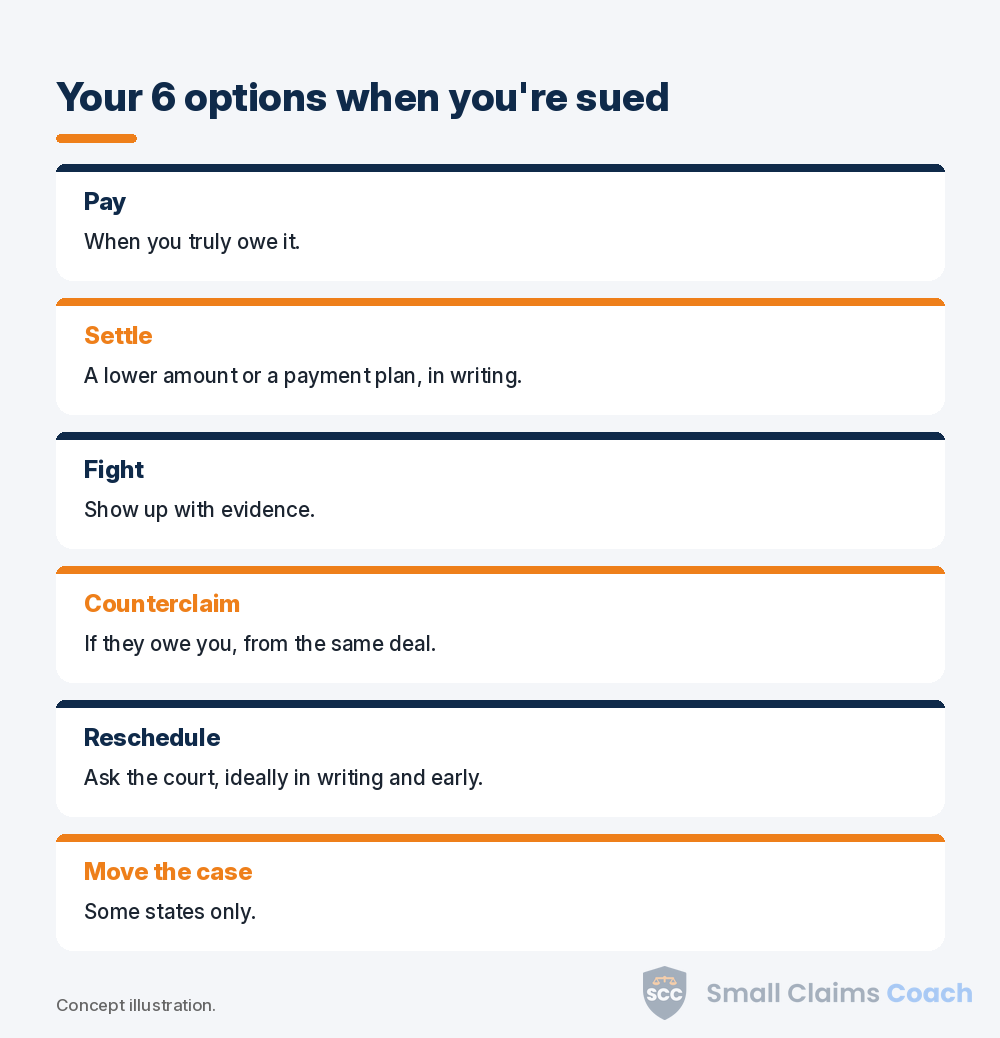
This is the deep-dive companion to our Sued in small claims? What to do next checklist. That post covers your first steps. This one compares each option side by side so you can choose.
What are my options if I'm sued in small claims court?
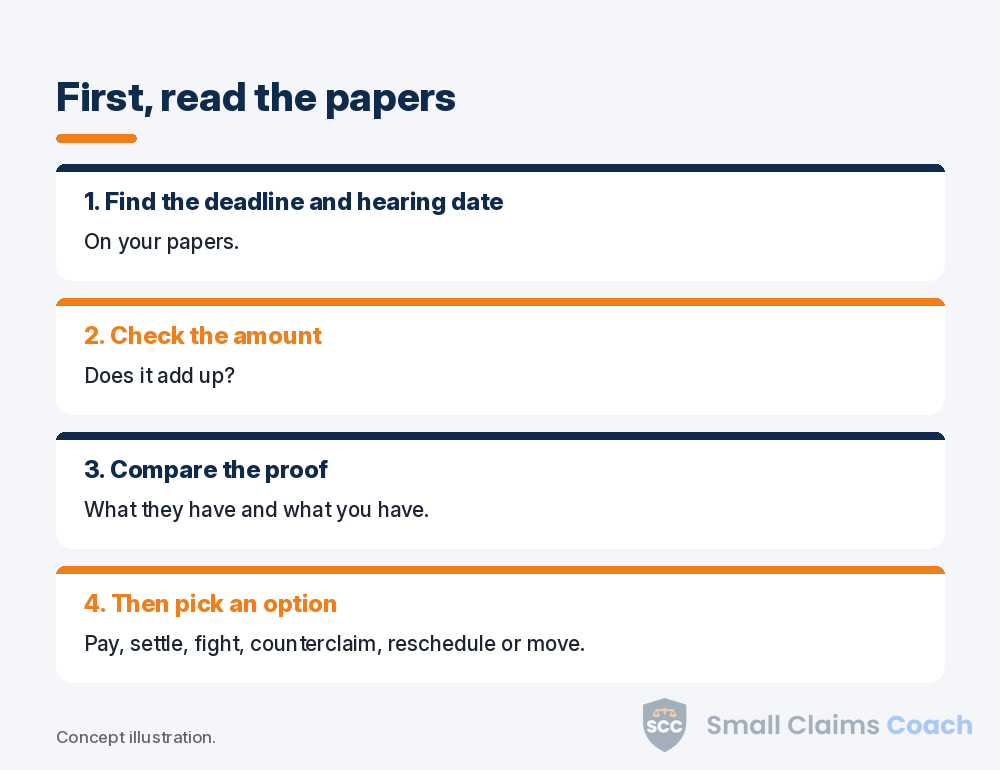
- Pay. Best when you truly owe the money. Get written confirmation that the case will be dropped.
- Settle. Agree on a lower amount or a payment plan. Put it in writing and tell the court.
- Fight. Show up with evidence and explain why you don't owe it, or owe less.
- Counterclaim. If the plaintiff owes you, many states let you raise it in the same case.
- Reschedule. Ask for a new date if you have a real conflict. Ask early.
- Move the case. Some states let defendants ask for regular court or a jury. Many don't.
Been sued? Get the full guide.
The full guide is for Playbook members: a decision tree for choosing your option, a settlement offer letter template, a counterclaim worksheet, a reschedule request template, and a defendant's hearing outline. The Playbook also gives you a filled-in sample of your state's claim form (every state and DC has one; for Mississippi, Oklahoma and Wyoming it's a sample layout we made, so you'd get the real form from the court clerk) and your state's Playbook section. One membership covers every state. $149 for your first year (introductory offer), then $199 a year. Join now.
Should I settle or fight a small claims case?
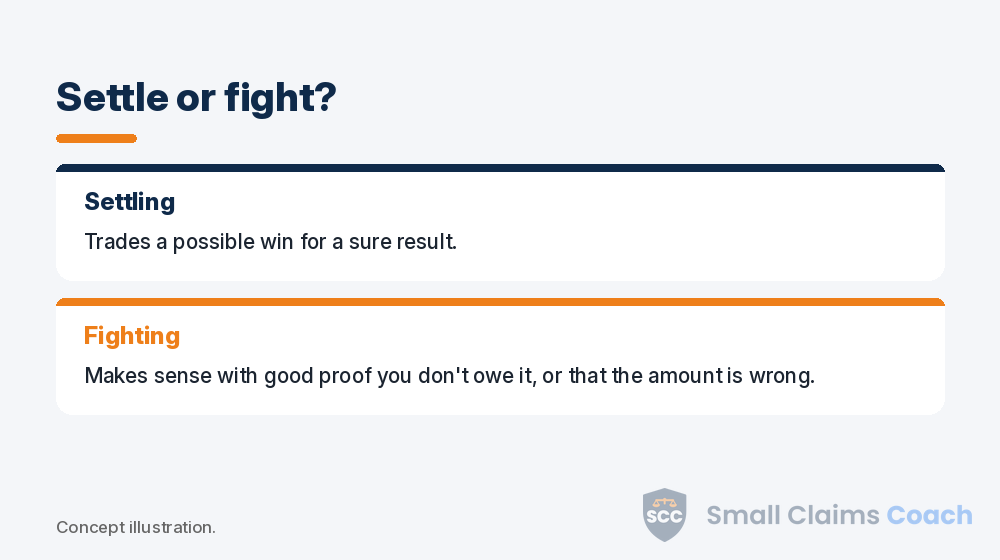
Settling trades a possible win for a sure result. Fighting makes sense when you have good proof that you don't owe the money, or that the amount is wrong.
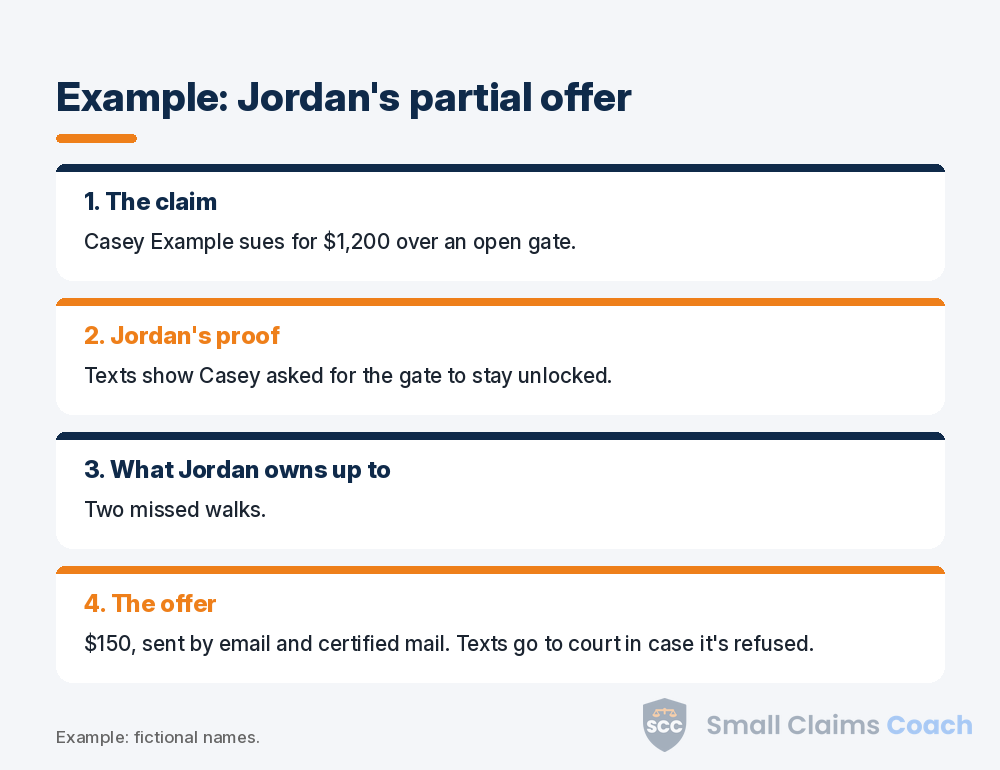
Example: Jordan's partial offer
Made-up example (not a real case): Jordan Sample, a dog walker, is sued by a client, Alex Doe, for $1,200 after a gate was left open. Jordan's own texts show the client asked for the gate to stay unlocked, but Jordan did miss two walks. Jordan offers $150 for the missed walks, sends the offer by email and certified mail, and brings the texts to court in case the offer is refused.
Can I counterclaim or move the case?
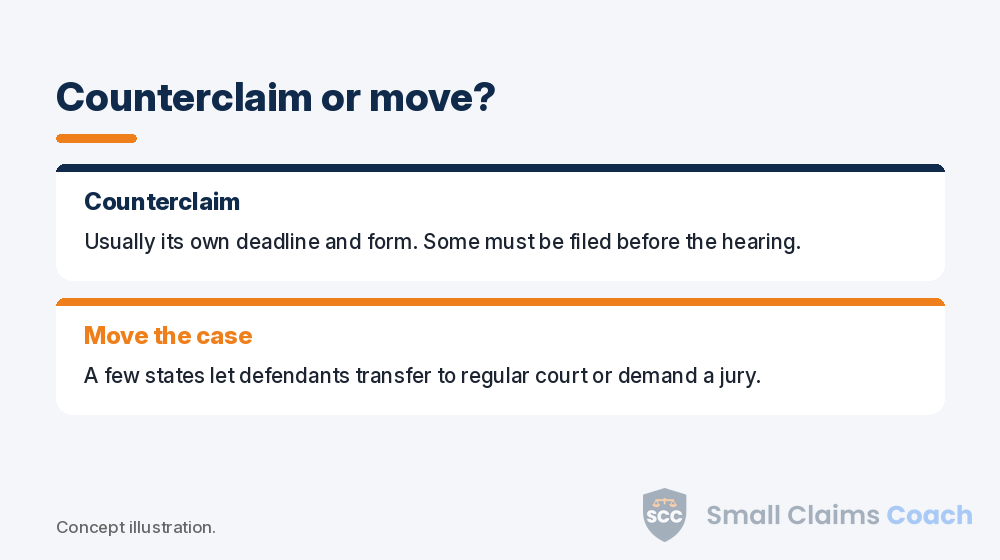
Counterclaims usually have their own deadline and form, and some must be filed before the hearing. A few states let defendants transfer a case to regular civil court or demand a jury. Look up your state's rules: California, Texas, New York, or the full states hub.
Thinking about a counterclaim?
The full guide has a counterclaim worksheet and a reschedule request template. Your state's Playbook section covers your court's rules. General legal information, not advice about your case.
What should you check before you decide?
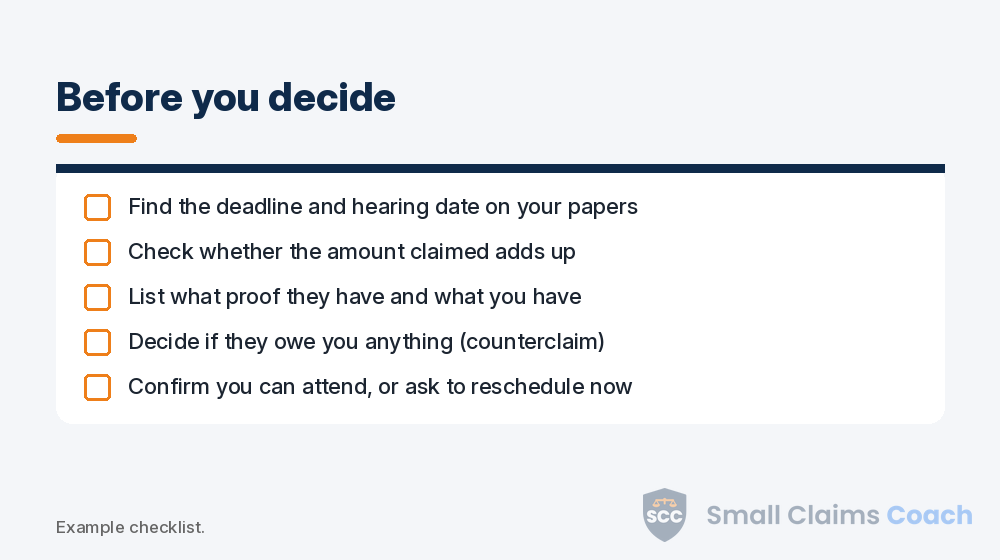
The five-box check
- ☐ Find the deadline and hearing date on your papers
- ☐ Check whether the amount claimed adds up
- ☐ List what proof they have and what you have
- ☐ Decide if they owe you anything (counterclaim)
- ☐ Confirm you can attend, or ask to reschedule now
In the full guide (Playbook members):
- A decision tree for choosing your option
- A settlement offer letter template
- A counterclaim worksheet
- A reschedule request template
- A defendant's hearing outline
This website and our Playbook are designed to give you the tools and confidence to handle your small claims case yourself, without a lawyer. If you think something is missing, we would like to hear about it so we can keep improving our Playbook. But if your situation is complicated, does not fit the samples we cover, or a filing deadline is close, you may want to call a lawyer.
This information is for educational purposes only. It is not legal advice. Rules, deadlines, fees and forms vary by state and court. Check your court's rules or self-help center before you act.
You do the work. The Playbook hands you the plays.
The full guide covers the list above, step by step. Your membership also includes a filled-in sample of your state's claim form and your state's Playbook section, with prep guides that work in any state: a document checklist, exhibit labels, a prep timeline and a hearing-day outline. One membership covers every state.