Landlord-Tenant Small Claims: Security Deposits, Damage and Unpaid Rent
Landlord-tenant small claims: security deposit disputes, damage beyond normal wear and tear, and unpaid rent, with the evidence each side needs.
Deposit disputes feel personal, on both sides. Small claims court handles a lot of them, and the side with better records usually has the easier day.
We'll use one made-up case: Jordan Sample moves out of an apartment owned by Typical Properties LLC, and most of the deposit doesn't come back.
The quick answer: what landlord-tenant cases go to small claims?
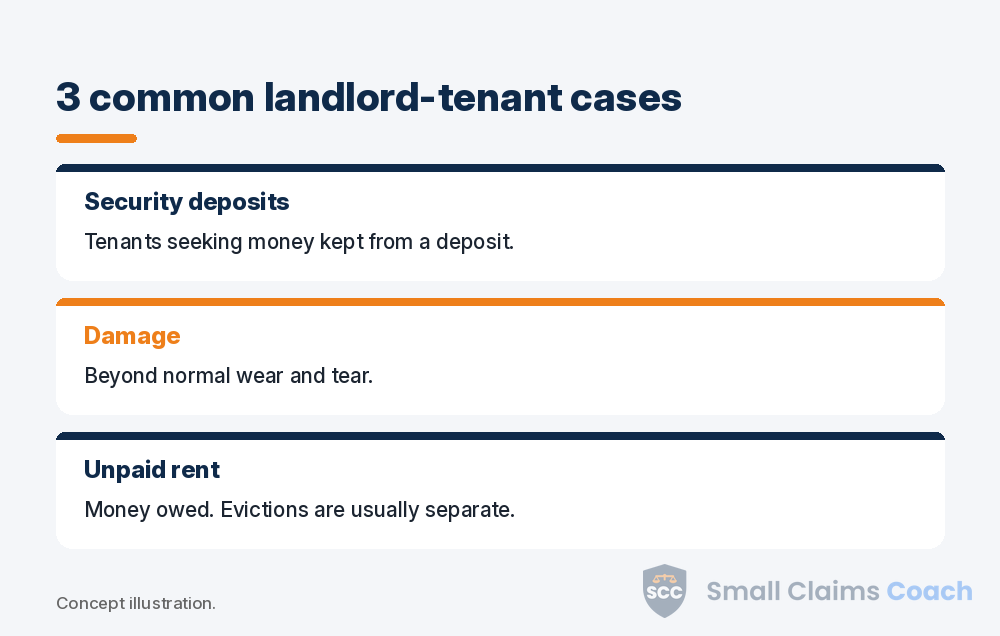
Small claims court commonly handles security deposit disputes, damage claims beyond normal wear and tear, and unpaid rent. Tenants usually need the lease, move-in and move-out photos, and the landlord's itemized deductions, or proof none were sent. Landlords need proof of the damage or rent owed and what it cost. Many states set deposit deadlines and penalties, so check your state's rules.
Deposit, damage or rent case? Get the full guide.
The full guide is for Playbook members: a deposit-case evidence checklist, a deposit demand letter template, a damage-vs-wear worksheet, and hearing outlines for both sides. The Playbook also gives you a filled-in sample of your state's claim form (every state and DC has one; for Mississippi, Oklahoma and Wyoming it's a sample layout we made, so you'd get the real form from the court clerk) and your state's Playbook section. One membership covers every state. $149 for your first year (introductory offer), then $199 a year. Join now.
Can I sue my landlord for my security deposit?
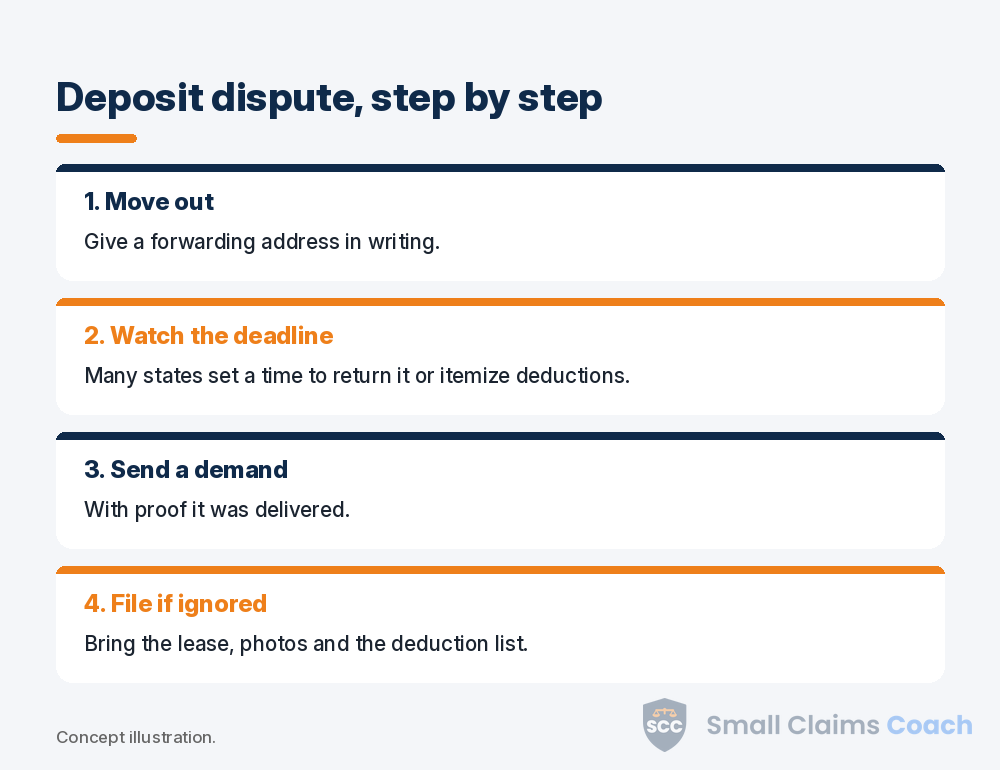
Usually yes. Many states require landlords to return the deposit, or send an itemized list of deductions, within a set time after move-out, and some allow extra damages if they don't. The deadline and penalty differ by state. Check yours: New York, Massachusetts, Illinois, or the states hub.
Example: Jordan's deposit
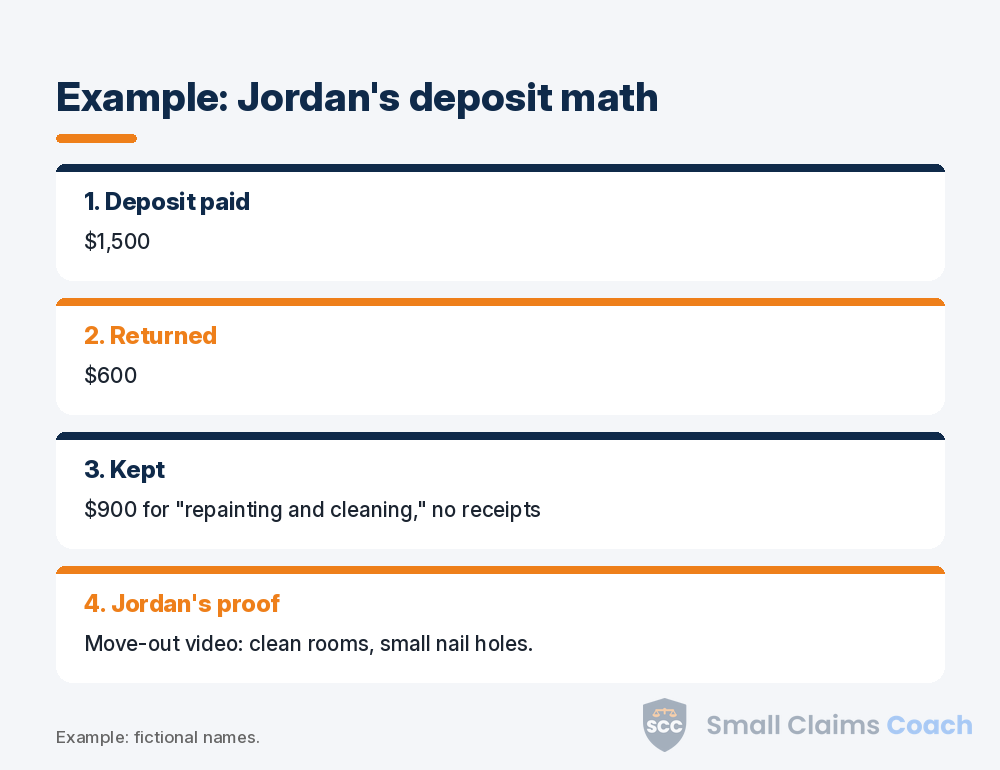
Made-up example (not a real case): Jordan Sample moves out of a (made-up) apartment and gives the landlord, Typical Properties LLC, a forwarding address in writing. Jordan's $1,500 deposit comes back as $600, with $900 listed for "repainting and cleaning" and no receipts. Jordan's move-out video shows clean rooms and small nail holes. Jordan sends a demand letter by certified mail asking for the $900, then files when it's ignored. Jordan brings the video, the lease and the deduction list.
Do I need a security deposit lawyer, or can I handle this in small claims myself?
Many deposit disputes are handled by tenants and landlords themselves in small claims court, because the core proof is usually documents you already have: the lease, move-in and move-out photos, the itemized deductions or proof none were sent, and your messages. Before you decide whether to talk to a lawyer, check the local facts that control a deposit case in your court — the deposit return deadline and any penalty rule in your state, the small claims dollar limit, and which court hears deposit cases where you live. Those rules vary by state and court, so start with your state page and check your court's rules.
In the full guide (Playbook members):
- Tenant and landlord evidence lists
- A deposit demand letter template
- A damage-vs-wear worksheet
- Hearing outlines for both sides
This website and our Playbook are designed to give you the tools and confidence to handle your small claims case yourself, without a lawyer. If you think something is missing, we would like to hear about it so we can keep improving our Playbook. But if your situation is complicated, does not fit the samples we cover, or a filing deadline is close, you may want to call a lawyer.
This information is for educational purposes only. It is not legal advice. Rules, deadlines, fees and forms vary by state and court. Check your court's rules or self-help center before you act.
You do the work. The Playbook hands you the plays.
The full guide covers the list above, step by step. Your membership also includes a filled-in sample of your state's claim form and your state's Playbook section, with prep guides that work in any state: a document checklist, exhibit labels, a prep timeline and a hearing-day outline. One membership covers every state.