What Does Pro Se Mean? A Plain-English Guide for Small Claims
Saw "pro se" on a court paper? It means handling your own case without a lawyer. Here's the plain-English meaning and what it looks like in small claims.
Updated on October 29, 2026
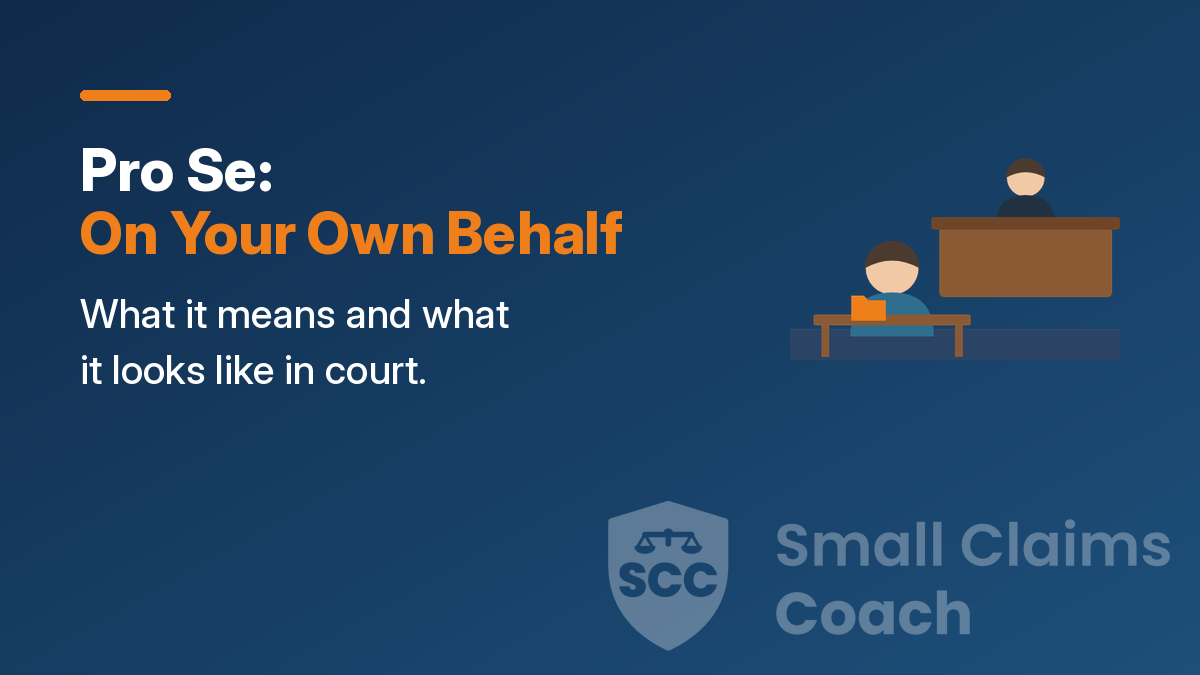
Pro se is a Latin term meaning "on one's own behalf." In court, it describes a person who presents their own case without a lawyer. Small claims court is meant to be simpler than regular court, and some states, such as California, don't let a lawyer represent you at the hearing. You still follow the court's rules and deadlines.
If you just spotted "pro se" on a form or a court notice, take a breath. It's not a warning. It's simply the court's label for someone handling their own case.
The quick answer: what does pro se mean?
- Pro se means "on one's own behalf." You present your own case, without a lawyer.
- Courts use other labels too: "self-represented litigant" or, in some courts, "pro per."
- Small claims is built for it. Forms are simpler and hearings are less formal.
- The rules still apply. Deadlines, serving papers and evidence are your job.
Ready to handle your own case?
Playbook members get the rest of this guide: a pro se readiness check, a sample case calendar, a plain-English court-paper decoder, a clerk call script, and what to bring on hearing day.
$149 for your first year (introductory offer), then $199 a year. Join now.
What does pro se mean?
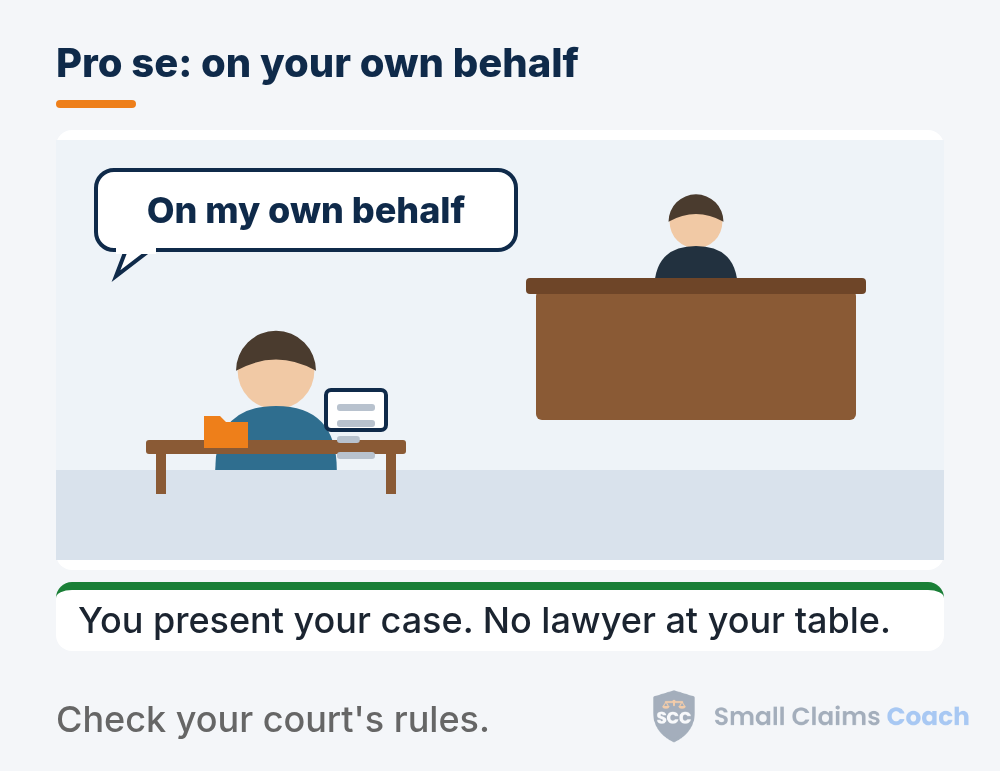
The US Courts glossary defines it this way: "Pro se: A Latin term meaning 'on one's own behalf.' In courts, it refers to persons who present their own cases without lawyers." (US Courts glossary)
Pro se vs. pro per: is there a difference?
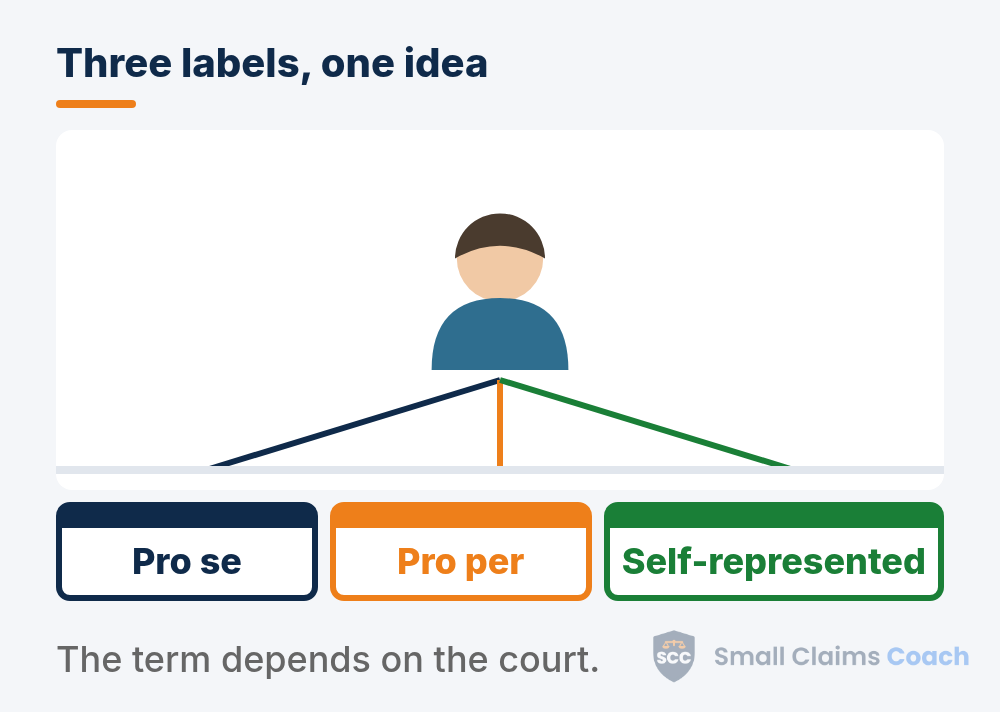
Generally, no. Both describe a person who represents themselves. Which term shows up depends on the court.
- Pro se: Latin for "on one's own behalf." You may see it in many courts, including federal courts.
- Pro per (in propria persona): from the Latin for "in one's own proper person." You may see it in California courts.
- Self-represented: plain English. You may see it on court self-help pages.
What is a pro se litigant?
A litigant is a party to a case. A pro se litigant is a party who handles the case without a lawyer.
- Pro se plaintiff: the person who files the case and handles it on their own.
- Pro se defendant: the person who was sued and handles their side on their own.
We cover both roles in pro se defendant or plaintiff: your first steps.
Pro se in small claims court
Small claims is designed for people on their own
Small claims courts generally use simpler forms and less formal hearings than regular civil court. Oregon's law, for example, says small claims hearings "shall be informal." The exact process depends on your state. See your state guide.
Some states limit lawyers in small claims
In some states, lawyers can't represent parties at a small claims hearing. California's court self-help site says: "You can ask a lawyer for advice before you go to court, but you can't have one with you in court." (California Courts self-help)
Other states allow lawyers, or allow them only in some situations. We walk through the patterns in do you need a lawyer for small claims court?
Check your court's rules
Rules vary by state and sometimes by court. Check your state's rules before your hearing.
What you're responsible for when you're pro se
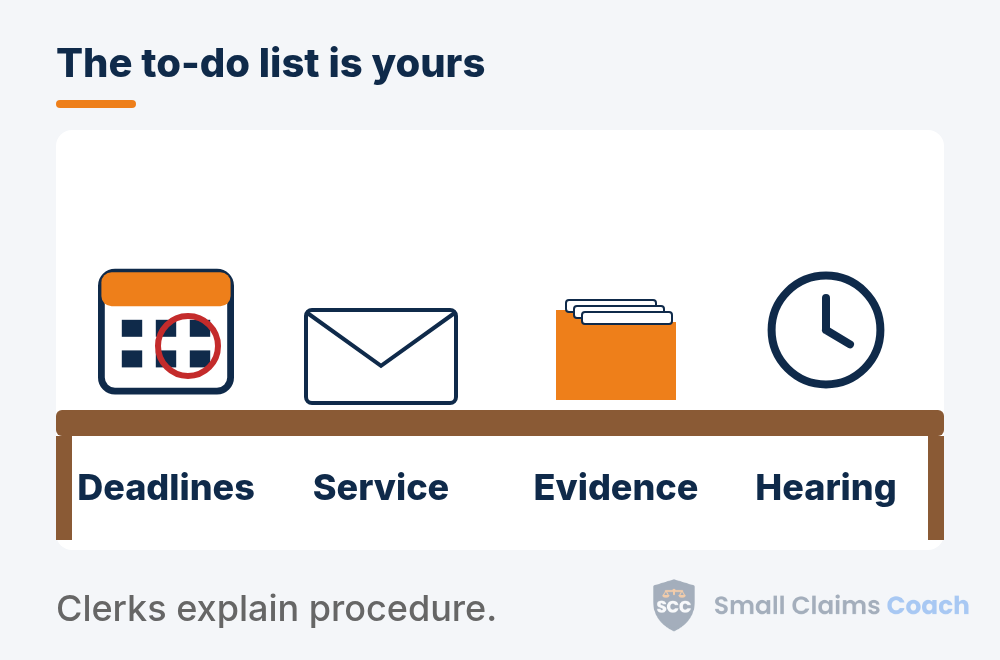
Being pro se means the to-do list is yours. That usually includes:
- Filing deadlines: knowing when papers are due.
- Serving papers: making sure the other side is officially notified. See how to serve small claims papers.
- Evidence: gathering and bringing it. See how to preserve evidence.
- Your hearing date: knowing when and where to show up.
- Asking for help: court clerks and self-help centers can often explain procedures, but court staff can't give legal advice.
Coach's Tip: Make one folder, paper or digital, the day you decide to handle your case. Every notice, receipt and photo goes in it. Future you will be grateful.
Common pro se terms you'll see
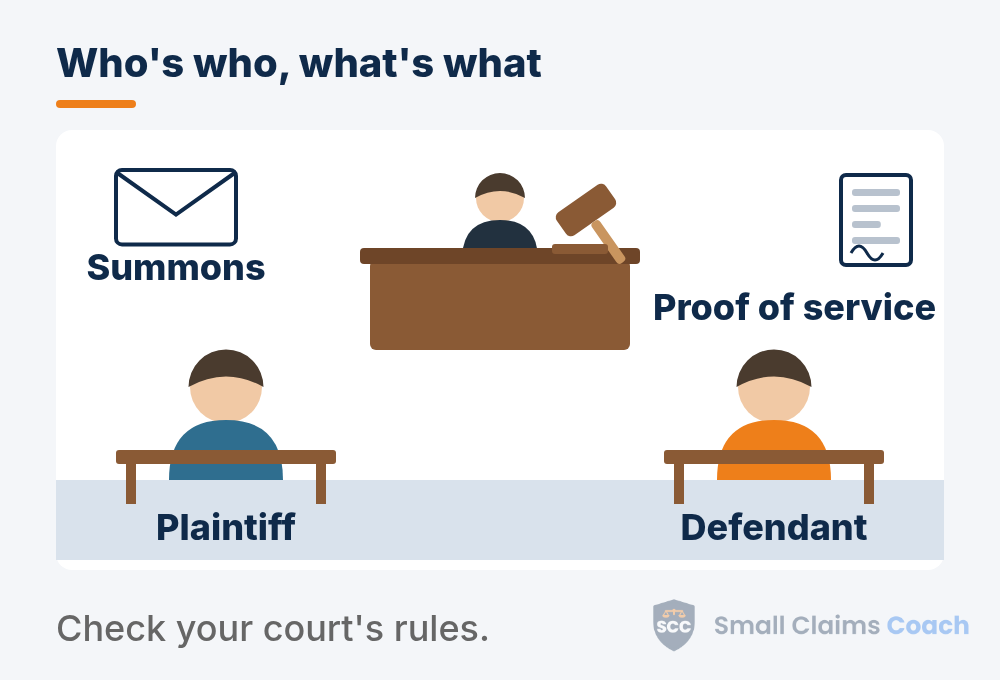
- Plaintiff: the person who files the case.
- Defendant: the person being sued.
- Summons: the court paper telling the defendant about the case.
- Proof of service: the signed form showing the papers were delivered.
- Default judgment: a decision made when a properly served defendant doesn't respond or appear. Rules vary by state.
- Motion: a written request asking the court to do something. A "pro se motion" is simply a motion filed by a self-represented party.
Frequently asked questions
What does pro se mean?
Pro se is a Latin term meaning "on one's own behalf." In court, it means a person is presenting their own case without a lawyer.
Is pro se the same as pro per?
Generally, yes. Both describe a person who represents themselves in court. "Pro per" is short for "in propria persona" and is used in some courts, such as California. Which term you see depends on the court.
What is it called when you represent yourself in court?
It is called appearing pro se. Courts may also call you a self-represented litigant or, in some courts, pro per.
What is a pro se litigant?
A pro se litigant is a party to a case, either the plaintiff or the defendant, who handles the case without a lawyer.
Can you be pro se in small claims court?
Yes. Small claims court is designed for people who represent themselves, and some states limit or do not allow lawyers there. Check your state's small claims rules before your hearing.
Do pro se litigants have to follow the same court rules?
Yes. People who represent themselves are generally expected to follow the same rules and deadlines as everyone else. Court self-help centers and clerks can explain procedures but cannot give legal advice.
This information is for educational purposes only. It is not legal advice. Rules vary by state and court. We try to keep every page up to date, but local rules, fees, and information change regularly. If you have questions, or our numbers don't match what your court publishes on its website, double-check with your court clerk.
Small Claims Coach uses public information to build the Playbook, which coaches you as you organize and present your own case. We are not your lawyer, there is no attorney-client relationship, and we don't want the details of your case. Check your state's rules.
In the full guide (Playbook members):
- A pro se readiness check
- A sample case calendar
- A court-paper decoder
- A worked example: Jordan Sample goes pro se
- A script for calling the clerk
- What to bring on hearing day
- Common pro se mistakes