10 Things to Do Before You Sue in Small Claims Court (Checklist)
Filing is built to be simple. Getting paid is the hard part. Ten calm checks before you file help you decide whether filing makes sense.
Updated on October 29, 2026
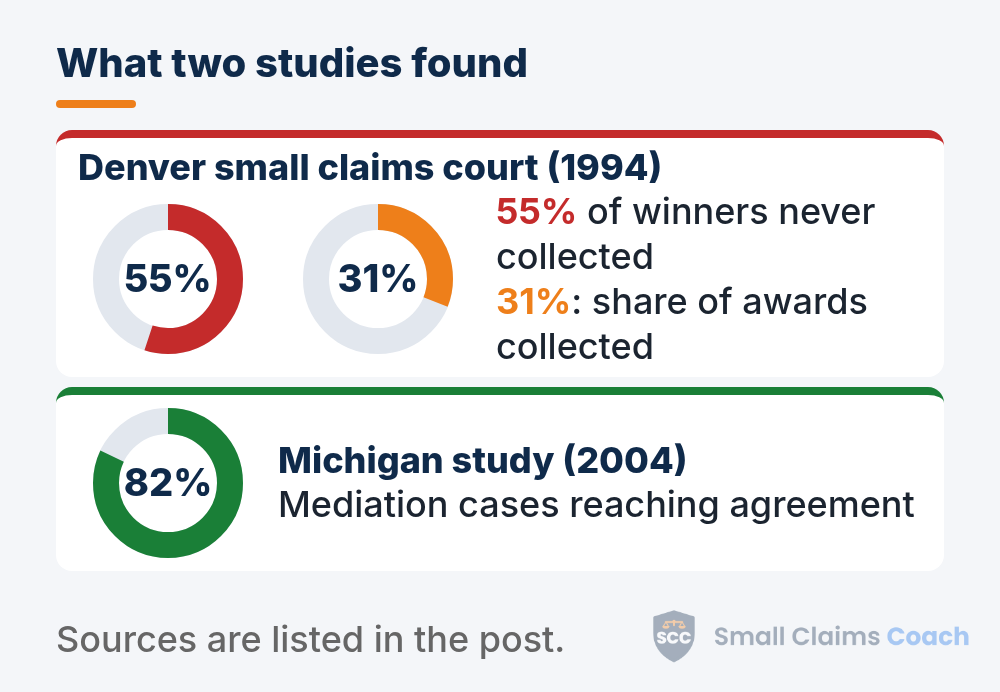
Filing in small claims is built to be simple. Getting paid is often the hard part. One study of Denver's small claims court found that 55% of winning plaintiffs never collected any part of their judgment (Best, Zalesne et al., 21 Fordham Urb. L.J. 343 (1994)). A little preparation before you file helps you decide whether a case is worth bringing, and you can do it one step at a time.
The quick answer: what should I do before suing in small claims court?
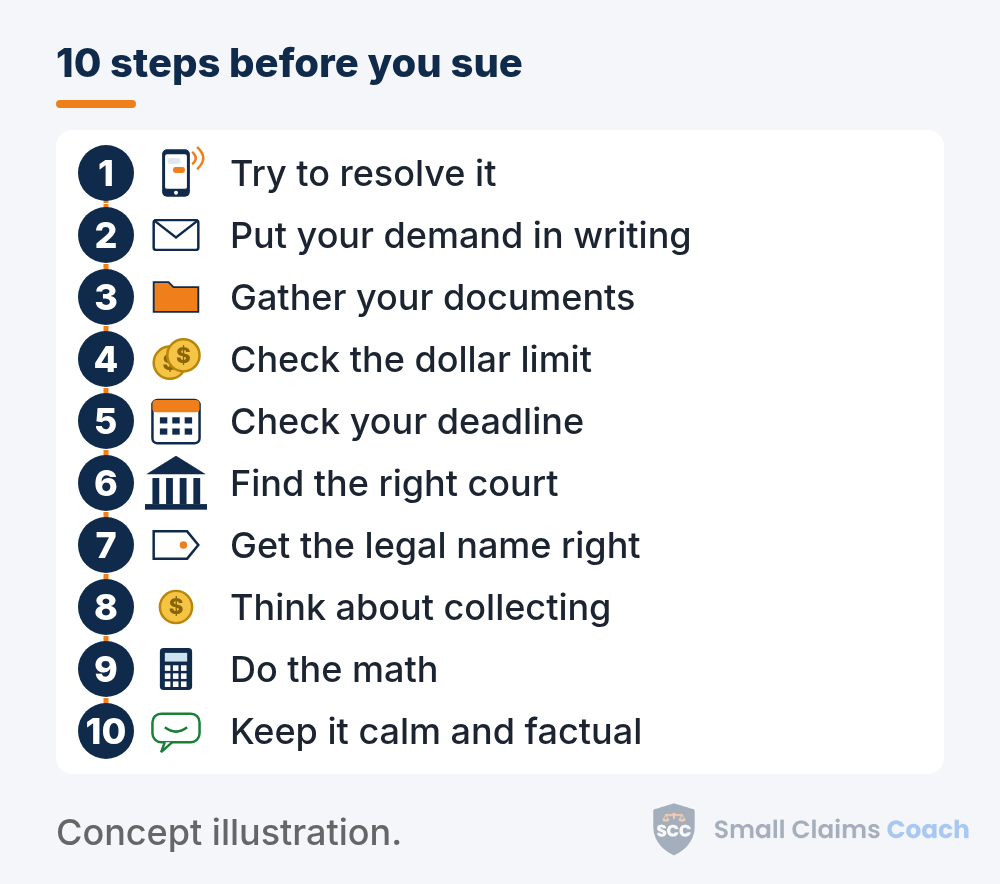
- Try to resolve it first. One calm call or email can end it.
- Put your demand in writing. What happened, what you want, and a date to respond.
- Gather your documents and screenshots in date order, with dates and names showing.
- Check the dollar limit for your court.
- Check your deadline. Good claims can expire.
- Find the right court.
- Get the other side's legal name right.
- Think about collecting. Can they pay?
- Do the math on time and cost.
- Keep it calm and factual.
Want each step in depth?
The full guide is for Playbook members. It covers all 10 steps in depth, with a made-up worked example from first call to filing decision, a "worth it?" worksheet for fees, time and collecting, how to find a business's legal name, and a pre-filing checklist. The Playbook also gives you a filled-in sample of your state's claim form (for Mississippi, Oklahoma and Wyoming it's a sample layout we made, so you'd get the real form from the court clerk) and your state's Playbook section. General legal information, not advice about your case.
$149 for your first year (introductory offer), then $199 a year. Join now.
Should I try to settle before going to small claims court?
Usually it's worth one honest try. A short call or email that says what went wrong and what you'd like can end a dispute faster than any lawsuit. Write down the date, who you spoke with and what was said. Even if it fails, it shows you were reasonable.
You can also ask your court whether mediation is available. In a Michigan study that surveyed 600 small claims plaintiffs from five courts, agreement was reached in 82% of mediation cases (Donohue & Atkin, Michigan State University, 2004). That's a correlation, not proof that mediation caused it.
Do I need to send a demand letter before small claims?
Some courts and some types of claims expect a written demand before you file, so check your state's rules. Either way, a short letter or email that says what happened, the amount you want, and a reasonable, specific date to respond is a good habit. Keep a copy and proof you sent it. Stick to facts: it may end up in front of the judge.
What evidence do I need for small claims?
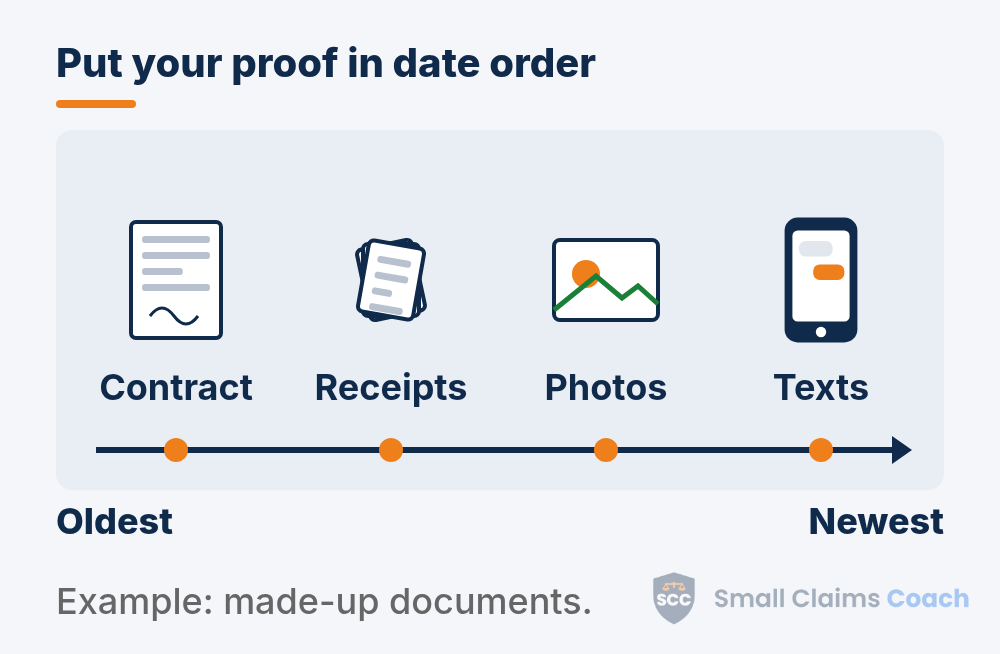
The judge wasn't there. They only know what you can show them. Collect contracts, receipts, invoices, estimates, bank or card records, photos, and texts or emails, and put them in date order. Our guides on preserving evidence, saving text messages and taking photos and video show how.
How much can I sue for, and how long do I have?
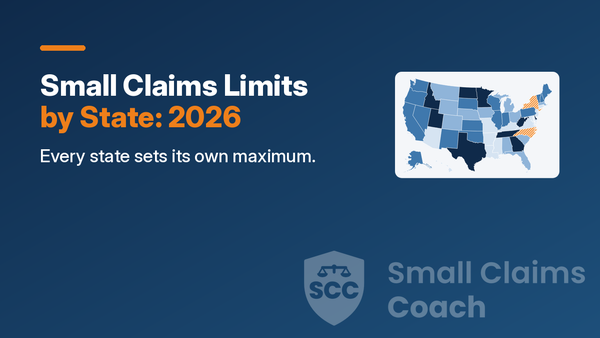
The limit varies by state, and sometimes by court and type of claim. See how much you can sue for in small claims and confirm on your state guide.
The deadline is called a statute of limitations, and it varies by state and by type of claim. A written contract, a verbal promise and property damage can each run on a different clock. If you've been waiting a while, check your state's rules now.
Where do I file, and whose name goes on the claim?
It's often where the other side lives or does business, or where the problem happened, but the rules vary by state. Check your state guide or ask the clerk. And the name on a sign or receipt isn't always a business's legal name. Many states have searchable business records that show the registered name.
Coach's Tip: Do the limit, deadline and court checks in one sitting, with your court's website open. Write down what you found, where, and the date you checked.
Is small claims court worth it?
Ask two questions. First, can the other side pay? In the Denver study, winners collected just 31% of the total amount awarded. Second, what will it cost? Filing fees, serving papers and time off work. Fees vary by state and court, and often by the amount claimed. Many courts post their fees online.
How should I act in small claims court?
You're allowed to be angry. But people tend to come across best when they stick to facts, dates and the amount owed. Calm and organized goes a long way.
Frequently asked questions
What should I do before filing in small claims court?
Try to resolve it directly, send a written demand, gather your documents, and check your court's dollar limit, your deadline, the right court and the other side's legal name. Then think about whether you can collect and whether the time and cost are worth it.
Do I have to send a demand letter before small claims?
Some courts and some types of claims expect a written demand before you file. Even where it isn't required, a short written demand can resolve the dispute and shows you tried. Check your court's rules.
How much does it cost to sue someone in small claims court?
There is usually a filing fee and a cost to serve the papers. Fees vary by state and court, and often by the amount claimed. Many courts post their fees online, and some can waive fees if you qualify.
Do I need a lawyer for small claims?
Many people handle small claims cases themselves. Whether you want legal advice depends on your situation, and rules on who may speak in court vary by state and court. Check your court's rules.
Is small claims court worth it?
It depends on what you're owed, what it will cost in time and fees, and whether the other side can pay. Think about collecting before you file.
Being sued instead? Read Sued in Small Claims Court? What to Do Next.
This information is for educational purposes only. It is not legal advice. Rules vary by state and court. We try to keep every page up to date, but local rules, fees, and information change regularly. If you have questions, or our numbers don't match what your court publishes on its website, double-check with your court clerk.
Small Claims Coach uses public information to coach you as you organize and present your own case. We are not your lawyer, there is no attorney-client relationship, and we don't want the details of your case. Check your state's rules.
In the full guide (Playbook members):
- Each of the 10 steps in depth, with what to do and what to save
- A worked example: Jordan Sample v. Typical Properties LLC, from first call to filing decision
- A "worth it?" worksheet for fees, time and collecting
- How to find a business's legal name
- A pre-filing checklist
- Common mistakes before you file